KBR 코리아비즈니스리뷰 · Section
GLOBAL ECONOMY
KBR+
Global Economy
European Central Bank Rate Hike: How Will Loan Interest, Export Proceeds, and Costs Change for Korean Companies?
Analyzing the ECB's September rate hike through the time lags between policy rates, corporate borrowing, receivables collection, and cost adjustments. It separates forecasts from actual performance and outlines contract-by-contract responses required for European business planning.
류현진 Editor · 09/16/2026
Read more →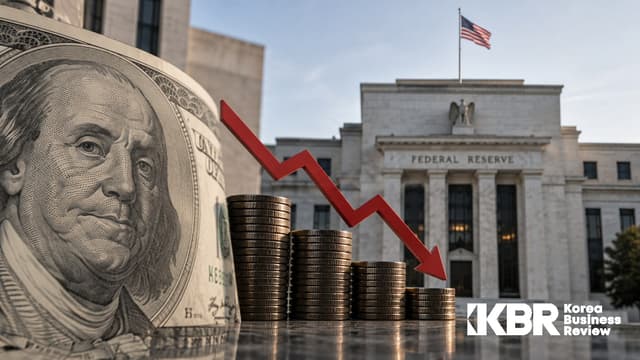
Global Economy
Corporate Risks of Waiting Solely for US Interest Rate Cuts
강지혜 선임기자 · 09/14/2026

Global Economy
US Manufacturing PMI at 54.6: Why Costs Refuse to Fall Despite Slowing New Orders
강지혜 선임기자 · 09/05/2026
Global Economy
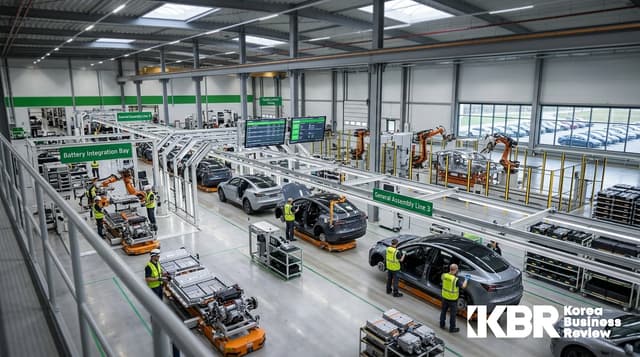
China's Quiet Weapon: Rare Earths and Battery Supply Chains as the Biggest Bottlenecks for Global Industry in 2026
이지영 기자 · 07/10/2026

Global Economy
Rate Cuts Are Over, Hikes Are Next: How the Warsh Fed Reversed the Course of Interest Rates
강지혜 선임기자 · 07/04/2026
Global Economy
New Zealand's 'Brain Drain' Warning: Why Young People Are Leaving for Australia
According to Stats NZ data for the year ending March 2026, 62,800 citizens departed New Zealand, resulting in a net outflow of approximately 36,500, with 63% heading to Australia. The outflow was concentrated among young adults aged 18 to 30 (24,900 people, or 40%), driven by an income gap of around 1.5 times compared to Australia, an economic downturn, and low migration barriers such as the Special Category Visa (Subclass 444) which requires no prior application. While this massive exodus lowers short-term unemployment statistics, it creates a vicious cycle that erodes growth potential by losing young talent—in whom education investments were made—just as they reach the age of paying taxes and starting families. The relocation of former Prime Minister Jacinda Ardern to Sydney is cited as a symbol of this trend, solidifying a structure where job shortages trigger emigration, which in turn weakens momentum. The implication for South Korea is that population 'net growth' statistics can mask the outflow of youth and citizens, and that the pressure of overseas emigration among core talent in sectors such as semiconductors, secondary batteries, and AI must be managed from a long-term growth perspective.
박찬호 선임기자 · 06/16/2026

Global Economy
The Fourfold Invoice of Low Birth Rates: Labor, Pensions, Domestic Demand, and Fiscal Health Shaken Simultaneously
As of 2026, about 80 countries worldwide have fallen below the replacement fertility rate of 2.1, with South Korea, China, and Japan forming the most severely affected group in East Asia. Low birth rates simultaneously present four types of costs: labor shortages, contraction of domestic consumption, structural deficits in pensions and health insurance, and fiscal pressure on the state. Japan walked this path 30 years earlier, where social security spending eroded national finances, and is now pivoting toward policies that adapt to population decline alongside encouraging childbirth. China entered the same path faster and on a larger scale after its population began declining in 2022, facing a more difficult adaptation process of aging before becoming rich. However, institutions like IIASA argue that the equation of low birth rates equating to economic crises is exaggerated, emphasizing education, productivity investment, and institutional reform. For businesses, this also represents an opportunity for new demand in areas such as automation, healthcare, and eldercare.
최수진 기자 · 06/15/2026

Global Economy
"The $200 Billion Illusion" — The True Structure of World Cup Host Country Economic Impacts
The 2026 North American World Cup is expected to have an economic ripple effect of approximately $40.9 billion on global GDP, as estimated by FIFA and the WTO, but the actual growth impact on the host countries may be limited. The United States, Canada, and Mexico have chosen a lightweight hosting model that utilizes existing stadiums and infrastructure to reduce cost burdens and the risk of "white elephants." Independent economists view the World Cup effect as positive for short-term tourism, accommodation, and consumption, but see weak evidence that it leads to mid- to long-term GDP growth. As an official FIFA mobility partner, Hyundai Motor Group can expect brand exposure and trust-building effects in the North American electric vehicle market. Ultimately, the core of the World Cup's economic impact depends not on the hosting itself, but on whether the cost structure, infrastructure utilization, and tourism and brand effects translate into actual assets after the tournament.
이태민 책임기자 · 06/15/2026

Global Economy
US Inflation Re-ignites at 4.2% & Launch of Warsh Fed: South Korea's Economy Navigates Dual Turbulence of High Exchange Rates and High Oil Prices
With the concurrent convergence of three variables—re-igniting inflation, robust employment, and new Federal Reserve leadership—the South Korean economy faces dual pressures of a won-dollar exchange rate soaring to the mid-1,500 KRW range and high oil prices hovering around $90 per barrel. If shocks originating from energy spill over into services and wages, pushing core inflation upward, the prolonged period of high U.S. interest rates will become a fait accompli, potentially extending the upward pressure on the strong dollar.
이지영 기자 · 06/11/2026

Global Economy
Triple Shock of War, Tariffs, and Blockade: The Reality of April 2026 Faced by the Global Economy and South Korea
With the blockade of the Strait of Hormuz effectively cutting off the transportation of crude oil and LNG produced in the region, an unprecedented shock is being dealt to the global energy supply chain. As of April 23, 2026, a Middle East-originated energy crisis and U.S. tariff shocks are simultaneously striking the global economy.
KBR 편집부 · 04/23/2026