
KBR 코리아비즈니스리뷰 · Section
K KNOWLEDGE
Free
K지식
Why Plastic Straws Are Returning Alongside Paper Straws
This article examines the extension of the grace period for plastic straws, changes in brand operations, and the significance of plant-derived materials. It explains the context behind the simultaneous use of both types of straws, connecting it to the 'provision upon request' policy under the 2026 anti-plastic agreement.
이지영 Editor · 10/10/2026
Read more →
K지식
When Wages Are Delayed, It Is Not Just the Payroll Schedule That Collapses
박소유 Editor · 10/07/2026

K지식
Wage Arrears: The Sequence for Resolving Delayed Interest for Current Employees Differs from Corporate Problem-Solving
이태민 Editor · 09/30/2026
K지식
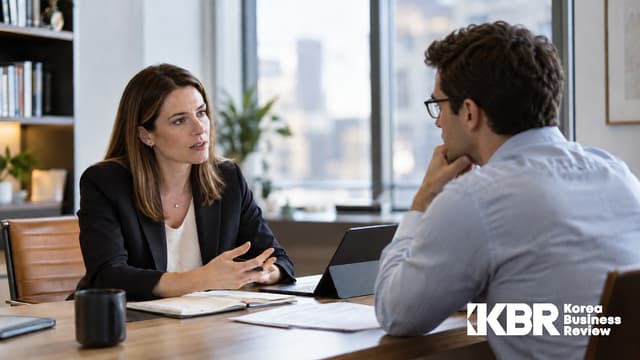
Why Do Performance Evaluations Fail Even When Changed? 4 Conditions for Designing an Evaluation System Tailored to Our Organization
KBR경영연구소 · 09/23/2026

K지식
What Is an Inclusive Wage System? The Standards for Overtime Pay Included in Monthly Salaries and Additional Payments
강지혜 Editor · 09/21/2026
K지식
How Much More Must We Sell at a 10% Discount? Why Profits Can Shrink Even When Sales Increase
Using specific formulas, this article examines how a 10% discount alters contribution margin and break-even quantities. By dividing the analysis into sales volume, variable costs, operational capacity, and repeat purchases, it establishes clear criteria for pricing decisions.
이우리 Editor · 09/16/2026

K지식
Why Working Capital Increases While Cash Remains Short
How net working capital differs from cash. Using calculation examples, it explains the composition of current assets and current liabilities, the timeline of accounts receivable, inventory, and accounts payable, and how to connect profit and loss with cash flow.
KBR경영연구소 · 09/15/2026

K지식
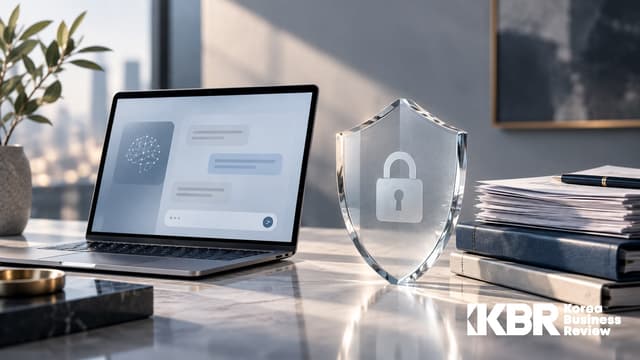
Can We Put Company Secrets into ChatGPT? The Absolute Boundaries of Information You Must Never Tell AI
The protection level of information entered into generative AI depends on the terms of use, account settings, data retention policies, and corporate contract conditions rather than the model itself. Turning off training utilization in ChatGPT and Claude does not mean data is deleted instantly or the possibility of legal submission disappears. U.S. courts have also reached differing conclusions on the legal protection of AI-used materials, meaning AI conversations cannot be uniformly viewed as 'confidential.' Undisclosed financial information, personnel data, customer information, and contract terms should not be entered as-is into personal AIs, prioritizing de-identification and enterprise environments. Information with severe leakage damage—such as resident registration numbers, passwords, authentication codes, card numbers, and API keys—is safest not being entered into generative AI at all.
강지혜 선임기자 · 09/12/2026
K지식
Employment Contracts, Annual Salary Contracts, and the Labor Standards Act: Which Prevails?
Employment and annual salary contracts are agreements between parties, but they cannot fall below the minimum standards set by the Labor Standards Act (Articles 3, 4, and 15 of the Labor Standards Act). The minimum wage for 2026 is set at 10,320 won per hour (2,156,880 won per month), and contract provisions falling short of this are automatically voided, with statutory standards applying instead (Ministry of Employment and Labor Notice No. 2025-47). The hierarchy of documents runs from the Constitution to the Labor Standards Act, collective agreements, rules of employment, and employment contracts, but if a lower-level document contains more favorable conditions, that part prevails (Principle of Priority for Favorable Conditions, contrary interpretation of Article 97 of the Labor Standards Act). An annual salary contract is a separate agreement specifying or modifying wage conditions, but provisions violating mandatory regulations, such as an annual salary scheme including severance pay, are generally void (Supreme Court Full Bench Decision 2007Da90760 delivered on May 20, 2010). The Supreme Court Full Bench decision in December 2024 abolished the 'fixity' requirement in calculating ordinary wages, opening the way so that ordinary wage status cannot be excluded solely by a tenure-condition phrase in a contract.
박찬호 선임기자 · 08/12/2026
K지식
Blistering Korean Peninsula: How Much Hotter Has South Korea Become Over the Past Decade?
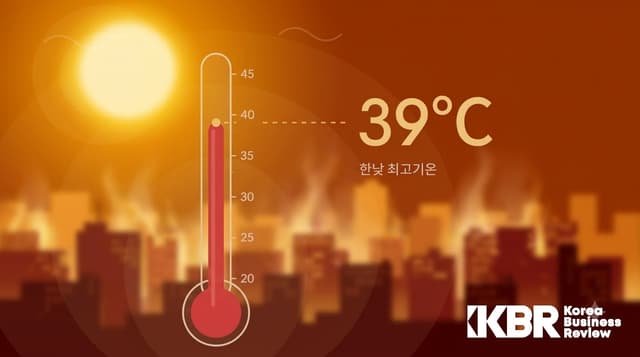
South Korea's annual average temperature has distinctly shifted upward over the past decade, rising from 13.4℃ in 2016 to 14.5℃ in 2024, the first time it entered the 14℃ range and the highest on record. Record highs were concentrated in recent years, with 2023 (13.7℃), 2024 (14.5℃), and 2025 (13.7℃) ranking 1st to 3rd historically. In the summer of 2025, the nationwide average temperature hit a record 25.7℃, and the average daily maximum temperature reached an all-time high of 30.7℃. Furthermore, Yangsan recorded 41.4℃ on July 31, 2026, and 41.6℃ on August 1, surpassing Hongcheon's 2018 record of 41.0℃ to set a new all-time high temperature. The normalization of extreme heat—marked by a restructured three-tier heatwave warning system featuring the new 'severe heatwave warning' and the earliest-ever first fatality on the opening day of heat-related illness monitoring—is expanding into a structural variable across institutional, health, and industrial sectors.
강지혜 선임기자 · 08/02/2026