
KBR 코리아비즈니스리뷰 · Section
ISSUE BRIEFING
Free
ISSUE BRIEFING
The Pace of AI Hacking and Corporate Tasks for Response, Viewed Through Commercial Bank Hacking Incidents
Based on financial sector information leaks and official domestic and international security materials, this article analyzes the automation and diffusion speed of AI attacks, and outlines the priorities for companies regarding external systems, authentication, response authority, and data management.
박찬호 선임기자 · 10/07/2026
Read more →
ISSUE BRIEFING
How to Question and Judge in the Era of AI: Differences in AI Usage Revealed by Public Research
최수진 기자 · 10/02/2026

ISSUE BRIEFING
Shorter Working Hours During Childcare: How to Redistribute Work When Replacements Cannot Be Found
이지영 기자 · 09/27/2026
ISSUE BRIEFING
Why Meta's Muse Is Gaining Attention: The Shift Toward AI Agents That Execute Reservations and Purchases
박소유 책임기자 · 09/27/2026

ISSUE BRIEFING
OECD Forecasts 2.9% Global Growth for This Year: Can South Korea's Upward Growth Revision Be Read as Expanding Corporate Demand?
이태민 책임기자 · 09/26/2026
ISSUE BRIEFING
The Real Difference Between Regular and Contract Workers: The Employment Boundary Divided by 'Two Years'
Regular employment is closer to an employment type used practically to distinguish from fixed-term, part-time, or dispatched workers rather than being a single unified legal concept penetrating labor relation laws. As of August 2025, non-regular workers numbered 8.568 million, accounting to 38.2% of total wage workers, and fixed-term workers stood at 5.337 million. Fixed-term workers can generally be employed for up to two years, but exceptions are recognized for project completion, vacancy replacement, and older worker employment. Even after the contract period expires, renewal expectation rights can be recognized, and unjustified discrimination against regular workers performing similar tasks is prohibited. In 2026, discussions on system reform surrounding the 'two-year limit' under the Fixed-Term Workers Act resumed, but as of September, specific forms of a new system have not yet been finalized.
류현진 Editor · 09/23/2026

ISSUE BRIEFING
Children Who Are Good at Math but Struggle with Choices: Why Elementary Economic Education Is Needed
The starting point of economic education drawn from the US financial capability curriculum and the UK's elementary mathematics curriculum… from allowance management to everyday decision-making.
최수진 기자 · 09/16/2026

ISSUE BRIEFING
"If You Can't Do AI, Even the CEO's Seat Is at Risk"... Global Executives Begin to Tense Up
According to a PwC survey, 42% of global CEOs cited whether they are innovating their businesses fast enough to keep pace with technological changes, including AI, as their biggest concern. Only 12% globally and 14% in South Korea have simultaneously achieved revenue growth and cost reduction through AI, revealing a performance gap among companies. In the Conference Board survey, among social, demographic, and technological risks, AI was ranked number one by CEOs, C-suite executives, and boards of directors alike. The WEF evaluated the negative consequences of AI as rising from 30th place in the 2-year outlook to 5th place in the 10-year outlook, viewing it as the fastest-rising global risk in the long term. For South Korean companies, execution capability—connecting organizational, workforce, and technological foundations as well as performance measurement systems to actual management systems rather than simply adopting AI—has emerged as a critical challenge.
최수진 기자 · 09/10/2026

ISSUE BRIEFING
GPT-6 Astra Resets the Standard for AI Competition: From 'AI That Answers' to 'AI That Works'
OpenAI unveiled its next-generation frontier model, GPT-6 Astra, on September 3, shifting the core of AI competition from 'answers' to 'task execution.' Astra significantly enhances computer use, coding, automation, and long-context processing capabilities, bringing it closer to an agentic AI that directly operates browsers, documents, spreadsheets, and development environments. Powered by a 1.05 million token context and enhanced tool-use capabilities, it demonstrated higher performance than GPT-5.6 Sol in complex enterprise tasks and long-duration development work. However, it does not outperform competitor models across all benchmarks, and its API pricing is higher than that of GPT-5.6 Sol, meaning actual adoption must weigh cost-performance against task completion. The core significance of GPT-6 Astra lies not in a 'smarter chatbot,' but in the full-scale advent of the AI agent era, which takes human instructions and executes real work through to completion.
이우리 선임기자 · 09/09/2026

ISSUE BRIEFING
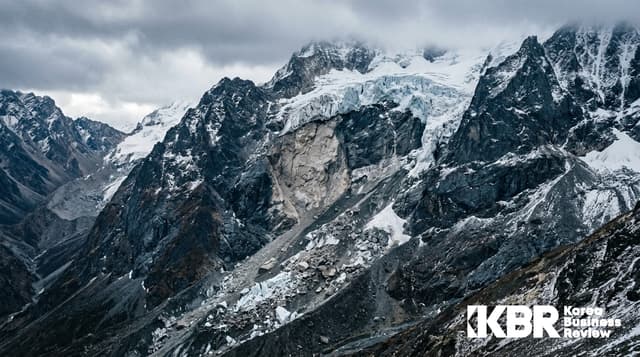
"It Wasn't a Glacial Lake Outburst"... What is Known About the Cause of the Nepal Mega-Flood
Around 8:37 AM on August 26, 2026, a massive glacier and rock collapse occurred in the high-altitude region of Langtang Lirung (7,234m) near the border of Nepal and China's Tibet. There was no heavy local rainfall. The US Geological Survey (USGS) revised a signal initially classified as a magnitude 4.4 earthquake to a collapse event equivalent to magnitude 5.2. The collapsed ice and rock turned into a torrent mixed with water and sediment, engulfing the downstream areas. Initial satellite imagery and expert analysis lean toward a glacier/rock slope collapse combined with valley blockage and its subsequent failure, rather than a typical GLOF where a glacial lake dam bursts. However, the exact chronological sequence of each stage can only be confirmed once field investigations are completed. The torrent swept through downstream gorges and settlements for about 100 km from Rende Kola through Bhotekoshi to Trishuli. As of August 29, Nepalese disaster authorities recorded 626 deaths and 2,426 missing persons, while China's Tibet separately reported 7 deaths and 554 missing persons. Hydropower sites were densely concentrated along the path of the torrent. The Independent Power Producers' Association, Nepal (IPPAN) stated that as of August 29, 13 business sites suffered direct damage, and communication was lost with 934 people across 11 of those sites. The 216 MW Upper Trishuli-1 (UT-1) project, a joint undertaking by Korea South-East Power (KOEN) and Doosan Enerbility, is one of them. At this site alone, the whereabouts of 576 people are unaccounted for, and 9 South Koreans remain out of contact, meaning that entire clusters of infrastructure in a single river basin were exposed to the same upstream risk.
이지영 기자 · 08/29/2026