KBR 코리아비즈니스리뷰 · Section
AI / TECH
KBR+
AI / Tech
Expanding AI Adoption in European Enterprises: The Next Connection Korean Suppliers Need to Find
Analyzing the gap between industry-wide AI adoption and core business integration based on a European Commission Joint Research Centre (JRC) report released on October 14, 2026. This article distinguishes survey denominators and compares strategies for Korean suppliers, including standard tools, process integration, and transition support.
이우리 Editor · 10/15/2026
Read more →
AI / Tech
Micron’s Surge in Earnings: How Will It Change Memory Contracts for Korean Companies?
이태민 Editor · 10/01/2026

AI / Tech
Tesla Cybercab Begins Commercial Operation in Austin: Where Does It Stand?
이우리 Editor · 09/26/2026
AI / Tech
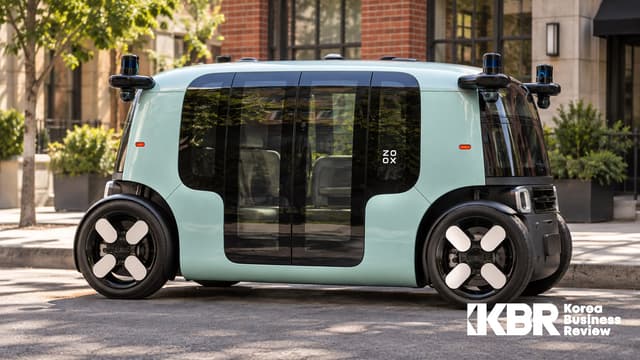
Amazon's Zoox Opens the Door to Commercial Robotaxis: The Next Competition After Driverless Driving Is Profitability
강지혜 Editor · 09/20/2026

AI / Tech
How the EU Right to Repair is Reshaping Post-Sale Competition: Exporters Must Redesign Parts and Services From the Ground Up
이우리 Editor · 09/18/2026
AI / Tech
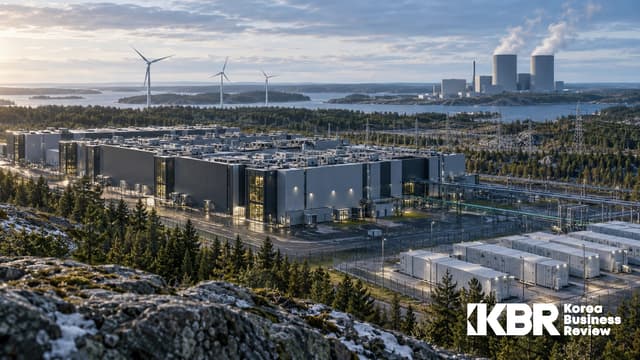
The Next Bottleneck for AI Data Centers is the Power Grid
Based on the IEA's data center power demand projections and nuclear contracts by Google and Microsoft, this article examines the management challenges of connecting power supply timelines, facility operations, and customer service launches.
류현진 Editor · 09/15/2026

AI / Tech
Why Did Google Contract with Nuclear Power Plants? The Power Grid Map of the AI Competition
On September 9, Google announced a plan to invest 13,000 million euros in Finland's digital infrastructure, clean energy, and collaborative projects. Google and Fortun's 22-year nuclear power purchase agreement is structured to begin small-scale supply in 2028 and expand to about 50% of the nuclear capacity from 2030 to 2049. Constellation signed a 20-year power purchase agreement with Microsoft in 2024 and announced plans to restart Unit 1 of the Three Mile Island nuclear plant. Talen and Amazon's expanded agreement in 2025 totals 1,920 MW based on full supply, with the announcement at the time expecting to reach full volume by 2032 at the latest. Google's India AI hub announced in 2025 is a plan to invest approximately $15,000 million from 2026 to 2030 to build data center, energy, and telecommunications infrastructure.
박소유 책임기자 · 09/14/2026
AI / Tech
Waymo at 500,000 Weekly Rides, Tesla Cybercab... The Autonomous Driving War Has Truly Begun
Waymo is expanding its robotaxi service footprint to 14 U.S. cities, recording about 500,000 paid weekly rides. Tesla has deployed the Cybercab in Austin, though the scale of actual paid and driverless operations among the 420 registered vehicles in Texas must be viewed separately. Baidu, Pony.ai, and WeRide are expanding their businesses into the Middle East and Europe, with Apollo Go's cumulative rides exceeding 23 million. Recalls of 3,871 Waymo vehicles and 105 Zoox vehicles show that handling edge cases is becoming a new competitive edge in large-scale autonomous driving services. Based in Gwangju with a 200-vehicle demonstration and unmanned vehicle safety guidelines, South Korea is pushing to implement Level 4 autonomy by 2027, but the gap in commercialization scale with the U.S. and China remains wide.
박찬호 선임기자 · 09/10/2026

AI / Tech
Qualcomm and Amazon Partner on AI Chips Tied to Up to $60B: Will Nvidia's Monopoly Be Shaken?
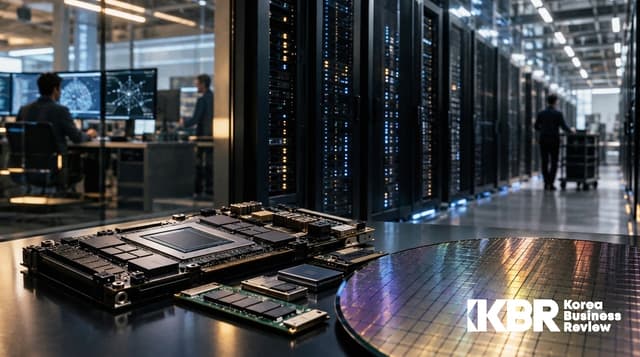
Qualcomm and Amazon will jointly develop multi-generation custom semiconductors for AI inference and 1.6T-class optical interconnect solutions. The $60 billion figure is not a confirmed Amazon purchase order, but a maximum payout tied to the phased vesting of Qualcomm warrants. Despite AWS custom chip revenues exceeding an annual run rate of $25 billion, AWS is broadening its procurement portfolio by adding an external custom chip supplier. While Nvidia's position is unlikely to be shaken in the short term, the expansion of the inference market and the growth of hyperscaler custom chips are long-term variables. Opportunities may arise for South Korean memory, foundry, and optical interconnect companies, but Qualcomm's manufacturing and memory suppliers for Amazon-bound chips have not yet been disclosed.
이지영 기자 · 09/09/2026
AI / Tech
GPT-6 Astra Reignites 'AI Replacement' Fears: Why the U.S. is Nervous First and the Impact on South Korean Industry
Following OpenAI's release of GPT-6 Astra, concerns have resurfaced in the U.S. that AI agents could replace certain corporate software tasks, triggering a revaluation of software company valuations. With U.S. corporate AI adoption already at 17-20% and reaching 37% for enterprises with over 250 employees, the industrial foundation for agentic AI is taking shape. South Korea is a direct beneficiary of expanding existing AI infrastructure investments, as seen in August semiconductor exports surging 209% year-over-year to $46.65 billion. Conversely, if AI begins directly manipulating enterprise software, industries with a high proportion of repetitive knowledge work—such as SaaS, SI, consulting, accounting, and HR—face mounting pressures to restructure pricing and workforce models. The Korea Development Institute (KDI) estimates that generative AI could cumulatively increase South Korea's total factor productivity by 1.5% to 3.5% over the next decade, while simultaneously suggesting downside pressures on employment in medium- and high-skilled occupations.
류현진 선임기자 · 09/09/2026