
GLOBAL ECONOMY
Rate Cuts Are Over, Hikes Are Next: How the Warsh Fed Reversed the Course of Interest Rates
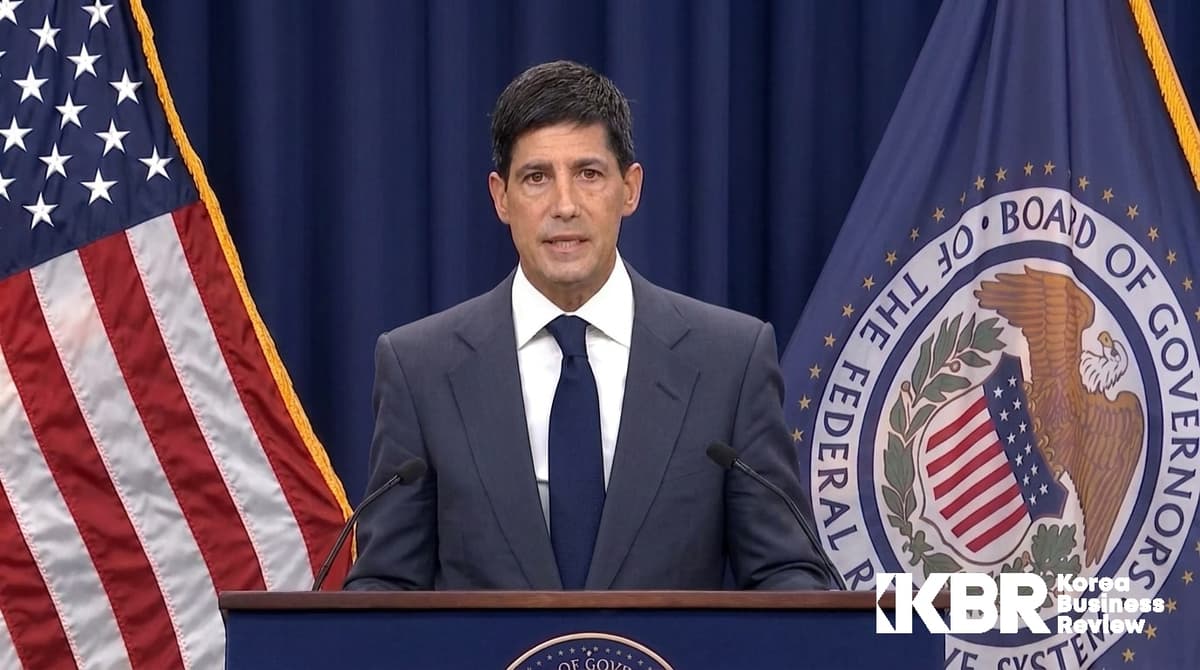
At its first FOMC meeting under the Warsh regime, the Federal Reserve kept its benchmark interest rate frozen at 3.50–3.75% for the fourth consecutive time. However, the dot plot signaled the possibility of a rate hike within the year, effectively declaring the end of the easing cycle. International oil prices have surged due to military conflicts between the U.S. and Iran in the Middle East, and May inflation indicators rose to the low-4% range, signaling a re-acceleration of inflation. U.S. employment indicators remained robust in May with 150,000 to 200,000 job additions and an unemployment rate in the low-to-mid 4% range, weakening the justification for rate cuts with this 'high inflation and solid employment' combination. In South Korea, amid an environment of a 2.50% base rate, a won-dollar exchange rate of 1,530–1,560 won, and 3.2% consumer inflation, the Bank of Korea's monetary policy dilemma is deepening as it must simultaneously account for the exchange rate, inflation, and household debt. U.S. interest rates are entering a phase shifting from 'higher for longer' to simply 'higher,' making it time for businesses and investors to redesign their foreign exchange hedging, financing, and portfolio strategies based on scenario-driven response systems rather than relying on 'rate cuts within the year.'
Dot Plot Reverses to Indicate 'Hikes' Despite Four Consecutive Freezes… South Korea Trapped at a 2.5% Base Rate, What Are the Options in the Era of the 1,500 Won Exchange Rate? Background: Expectations for Rate Cuts Have Effectively Vanished Expectations for interest rate cuts by the U.S.…
KBR Access
Read this Global Radar article now
Buy this article for ₩3,900 (30 days of access), or get KBR+ 10 — 10 paid articles for ₩9,900 (₩990 each). KBR Members (free sign-up) read one paid article free every month.
✓ No account needed · Checkout is in Korean
Best value
KBR+ 10 · ₩9,900
An insight pass that opens 10 KBR+ articles, one at a time, whenever you like
10 KBR+ articles including KBR Analysis — ₩990 each. Use them within 60 days.
Get KBR+ 10KBR NEWSLETTER
Sign up for free and get the KBR Newsletter!
Sign up and opt in to the newsletter to receive KBR's curated business and economic insights by email.
LATEST IN TOPIC
Latest in this topic



Related Content
Expanding AI Adoption in European Enterprises: The Next Connection Korean Suppliers Need to Find
KBR+A Different Starting Point for Entrepreneurship Found in Small Business Successions in Japan: Taking Over Customers and Equipment First
KBR+Delta Air Lines Sees Rising Revenue but Lower Operating Margins: A Revenue Structure That Withstands High Fuel Costs