KBR 코리아비즈니스리뷰 · Section
SPECIAL REPORTS
KBR+
KBR Special Reports
Why Do Employees Have to Pay Out of Pocket for Work AI Subscriptions?
When employees pay out of pocket for AI subscriptions used for work, where should the line for company support be drawn? Based on surveys from South Korea (2025) and the UK (2026), this article examines personal financial burdens, evaluation fairness, and account management issues, while analyzing selection criteria for direct corporate contracts, expense reimbursement, and trial use.
김민경 Editor · 10/14/2026
Read more →
KBR Special Reports
Nuri Has Reached Orbit: Where Does Korea's Space Industry Stand?
류현진 Editor · 10/10/2026

KBR Special Reports
Can AI Help Extend Human Life? The Current State of Medical AI
KBR경영연구소 · 09/21/2026

KBR Special Reports
Seoul's Cost of Living Lower Than New York and London, But Higher Than Tokyo: Assessing Seoul's Relative Costs Through Rent-Excluding Living Expenses and OECD Inflation Rates
박소유 책임기자 · 09/15/2026
KBR Special Reports
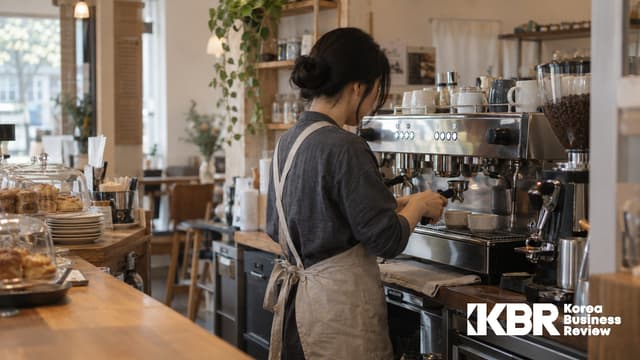
Small Business Closure Rates Drop, but It Is Too Early to Call It a Recovery
이우리 선임기자 · 09/15/2026
KBR Special Reports
South Koreans Drink 416 Cups of Coffee Per Capita Annually... The Current State of the 'Coffee Republic' and Key Market Watchpoints for 2026
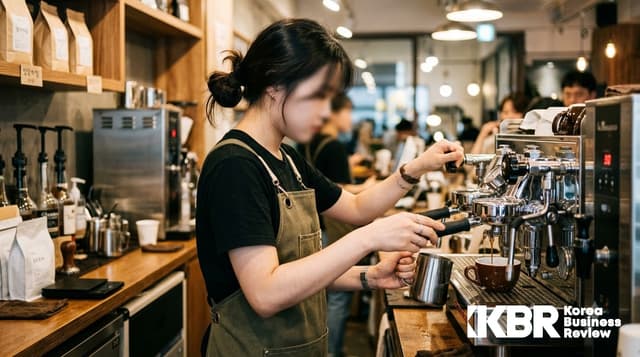
According to Euromonitor, South Korea's per capita annual coffee consumption reached 416 cups in 2024, which is 2.7 times the global average. Combined domestic sales and exports of coffee products totaled 3.7359 trillion won in 2024, achieving an average annual growth rate of 5.2% over six years. In 2025, coffee import values surpassed 2조 won for the first time due to soaring green coffee bean prices and a rising exchange rate. International bean prices bottomed out in February 2026 before rebounding in August amid concerns over supply disruptions in Brazil, driving increased volatility. Conversely, National Tax Service statistics showed that the number of coffee shops declined for the first time in the first quarter of 2025, and clear profitability strains are evident as operating profits fall despite rising franchise sales. Sales impacts were confirmed following a Starbucks brand controversy in May, which saw weekly payment amounts drop by 26.3%. Around the same time, brands like The Venti and Mega MGC Coffee adjusted their prices, though the industry attributes these adjustments to complex cost factors such as exchange rates and bean prices rather than the controversy. Despite a high import-dependency structure, K-coffee exports continued their growth, with Israel surpassing China to become the largest export market starting in 2023.
강지혜 선임기자 · 08/13/2026
KBR Special Reports
Where is Population Growth Highest? South Korea's 2026 Population Map Led by Gwangmyeong, Hwaseong, and Pyeongtaek
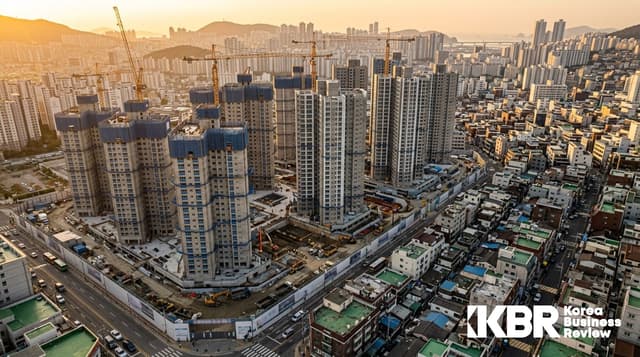
Driven by large-scale redevelopment and reconstruction apartment moves, Gwangmyeong, Gyeonggi Province, saw its population rebound by approximately 8.5%, rising from 277,281 in October 2024 to 300,826 in February 2026, recovering the 300,000 mark after about five years. Hwaseong and Pyeongtaek in southern Gyeonggi Province posted population growth rates of 12.5% and 9.6% respectively over the past five years, backed by massive investments from semiconductor giants like Samsung Electronics and SK hynix, with a notable influx of the 3040 generation. Several other cities and counties in Gyeonggi Province, including Uiwang, showed population growth driven by the creation of new residential districts. Conversely, the administrative capital Sejong experienced three consecutive months of population decline from December 2025 to February 2026, turning into a net outflow due to factors such as the relocation of the Ministry of Oceans and Fisheries. Separately from domestic migration, the number of foreign nationals residing in South Korea surpassed 2.8 million for the first time in October 2025, setting a new all-time high.
이태민 책임기자 · 07/18/2026
KBR Special Reports
Winners and Losers in the AI Transition: How Prepared Are South Korean Enterprises?
According to a Microsoft report (January 2026), South Korea has risen to 18th globally with an AI population adoption rate of 30.7%, entering the clear 'winner' group at the national level. However, a Korea Chamber of Commerce and Industry (KCCI) survey revealed that actual corporate AI utilization hovers in the 30% range, exposing a wide gap of about 48 percentage points compared to the 78.4% who acknowledge its necessity. While the utilization gap between large corporations and SMEs stood at 13.8 percentage points, controlling for environmental variables such as education, guidelines, and acceptance attitudes narrowed the pure scale gap to 4 percentage points, confirming that 'environment' rather than 'scale' is the real variable. The AI workforce has grown to approximately 57,000—still falling far short of the U.S. (780,000)—and the wage premium remains at just 6%, leaving a vulnerable link of talent outflow. Ultimately, the success or failure of the AI transition depends not on whether technology was adopted, but on whether the organization has established the environment to convert that adopted technology into organizational growth, presenting an opportunity to narrow the gap.
이태민 책임기자 · 06/16/2026

KBR Special Reports
"Pushed Out at an Average Age of 52.9"… The Cruel Re-employment History of Breadwinners in Their 40s and 50s, and the Truth Revealed by Statistics
According to a survey by Byuluck Market, the re-employment rate among those with retirement experience stood at just 51.8%, and their expected average monthly income upon re-employment was 2.904 million won—14.5% lower than their earnings at their primary jobs (3.395 million won). Middle-aged specialty media outlets and labor market analysts suggest that the rise in the "resting" middle-aged population may not simply reflect early retirement, but rather the outcome of failed re-employment and job mismatches. The fact that the top reason cited for leaving a primary job in supplementary statistics for older adults is business stagnation, suspension of operations, or closure (25.0%) implies that self-employment is becoming another exit route rather than an alternative to failed re-employment.
강지혜 선임기자 · 06/11/2026

KBR Special Reports
K-Cosmetics in the Global Market: Ranking 2nd in Exports with $11.4 Billion Today
Consumers of diverse nationalities explore Korean skincare products at a premium K-beauty store in Seoul. Exported to 202 countries as of 2025, K-beauty is rapidly expanding its global consumer base. [Photo = Korea Business Review DB] The Present of K-Beauty Told Through Numbers In 2025, the Korean cosmetics industry made history once again.
류현진 기자 · 04/14/2026