

KBR 코리아비즈니스리뷰 · Section
BUSINESS / INVESTMENT
KBR+
Biz / Investment
A Different Starting Point for Entrepreneurship Found in Small Business Successions in Japan: Taking Over Customers and Equipment First
This article examines the distinction between cumulative matching registrations as of March 2026 and small business succession cases from 2024 by the Japan Finance Corporation (JFC). It compares the takeover processes of a plastic processing company and a butcher shop, analyzing the continuity of customers, equipment, and skills, as well as the capital required post-acquisition.
류현진 Editor · 10/14/2026
Read more →
Biz / Investment
Delta Air Lines Sees Rising Revenue but Lower Operating Margins: A Revenue Structure That Withstands High Fuel Costs
류현진 Editor · 10/12/2026

Biz / Investment
Airbus Secures 110 Additional Aircraft Orders: Can It Achieve the Goal of 870 Deliveries This Year?
류현진 Editor · 10/12/2026
Biz / Investment
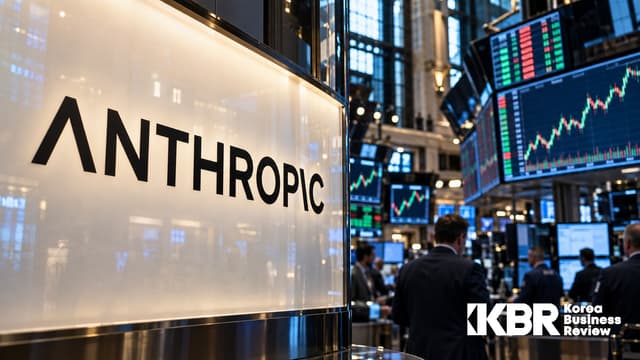
Why Anthropic Wants to Delay Its IPO: The Calculation of Growth and Capital Behind the November Timeline
박소유 Editor · 10/07/2026

Biz / Investment
Tesla's 13.7GWh Storage Deployment: Connecting Scale to Supply Chain Returns
박소유 Editor · 10/06/2026
Biz / Investment
Accenture's $22.17 Billion in Bookings: What Customers Should Look For in Contracts
Accenture's bookings, revenue, and profit margins should be viewed separately from a customer's investment performance. This article outlines the perspective for South Korean companies selecting external services by comparing scope, transition costs, and operational handover and exit conditions.
박소유 Editor · 10/05/2026

Biz / Investment
How to Read Costco’s Earnings: Dissecting an 11.2% Revenue Increase
Costco’s overall revenue growth and adjusted comparable sales answer different questions. Reading membership income, one-time gains, and digital growth separately reveals the true nature of growth. Here is a framework for retail executives to connect customer value with operational costs.
박소유 Editor · 09/30/2026

Biz / Investment
General Mills' Earnings Flat on Revenue, but Why It Is Betting on Product Innovation
General Mills' flat organic sales do not mean demand has stabilized uniformly across all businesses. As the company shifts its focus toward product innovation after completing price investments, it reads the conditions for future growth by breaking down differences in sales volume, pricing, and product mix by business, as well as profit comparison criteria and annual outlooks.
박소유 Editor · 09/30/2026

Biz / Investment
H&M's Profit Margin Rises to 10.6%: What Strength Remains After the One-Off Effects?
H&M's operating profit margin for the third quarter of fiscal 2026 included a one-off effect of about 1.6 percentage points. We analyze the conditions for repeatable profitability by reading sales currencies and inventory locations separately.
강지혜 Editor · 09/27/2026

Biz / Investment
Why CMA CGM Wants FedEx's Logistics Business: A Supply Chain Deal Where Expansion Meets Focus
CMA CGM's agreement to acquire FedEx Supply Chain represents a transaction where the strategies of network expansion and business focus intersect. The conditions of supply chain integration are analyzed by dividing them into ownership transfer and non-exclusive cooperation.
이지영 Editor · 09/24/2026