Korea Business Review · Section
GLOBAL RADAR
Standard
Biz / Investment
From 44% to 70%: How a Single Remark from NVIDIA Upended the AI Infrastructure Landscape
Nvidia reported fiscal Q2 2027 revenue of $96.221 billion (+106%) and data center revenue of $89.0 billion (+117%), beating both market consensus and its own guidance. CFO Colette Kress provided a preliminary outlook for fiscal 2028 revenue growth of approximately 70% during the earnings call—not an official formal guidance, but an unusual statement far exceeding the existing analyst consensus of 44-45%. The company explained that 70% is a figure reflecting supply constraints, and customer demand forecasts point to roughly double that level. Gross margins were guided down to 71-72% in Q4—with the direct cause being memory costs rather than competition, interpreted as a sign of strengthened pricing power for Samsung Electronics and SK Hynix. AWS plans to deploy 2 million additional GPUs from 2027 to 2028 (this quarter to fiscal Q2 2029), and order backlogs for South Korea's three major power equipment makers have exceeded 36 trillion won, though the $500 billion capital financing platform with six financial institutions is still in the promotion stage prior to final contracts amid an ongoing circular financing debate.
류현진 선임기자 · 08/29/2026
Read more →
AI / Tech
Where Do Advanced Global Companies Stand on AI Transformation? The Widening Gap Between 'Deep Transformation' (34%) and 'Surface-Level Adoption' (37%)
이우리 선임기자 · 08/12/2026

AI / Tech
Where Does China's Manufacturing AI Automation Stand? The Gap Between Mass Robot Deployment and Early Humanoid Commercialization
강지혜 선임기자 · 08/10/2026

Biz / Investment
The 'NATO Wall' That Swallowed 60 Trillion Won: Why Canada Chose Germany Over Hanwha Ocean
최수진 기자 · 07/12/2026

Global Economy
China's Quiet Weapon: Rare Earths and Battery Supply Chains as the Biggest Bottlenecks for Global Industry in 2026
이지영 기자 · 07/10/2026
Global Economy
Rate Cuts Are Over, Hikes Are Next: How the Warsh Fed Reversed the Course of Interest Rates
At its first FOMC meeting under the Warsh regime, the Federal Reserve kept its benchmark interest rate frozen at 3.50–3.75% for the fourth consecutive time. However, the dot plot signaled the possibility of a rate hike within the year, effectively declaring the end of the easing cycle. International oil prices have surged due to military conflicts between the U.S. and Iran in the Middle East, and May inflation indicators rose to the low-4% range, signaling a re-acceleration of inflation. U.S. employment indicators remained robust in May with 150,000 to 200,000 job additions and an unemployment rate in the low-to-mid 4% range, weakening the justification for rate cuts with this 'high inflation and solid employment' combination. In South Korea, amid an environment of a 2.50% base rate, a won-dollar exchange rate of 1,530–1,560 won, and 3.2% consumer inflation, the Bank of Korea's monetary policy dilemma is deepening as it must simultaneously account for the exchange rate, inflation, and household debt. U.S. interest rates are entering a phase shifting from 'higher for longer' to simply 'higher,' making it time for businesses and investors to redesign their foreign exchange hedging, financing, and portfolio strategies based on scenario-driven response systems rather than relying on 'rate cuts within the year.'
강지혜 선임기자 · 07/04/2026

Biz / Investment
India, the 'Paradox of the 6th Rank'… The World's Fastest-Growing Economy is Redrawing the Global Map
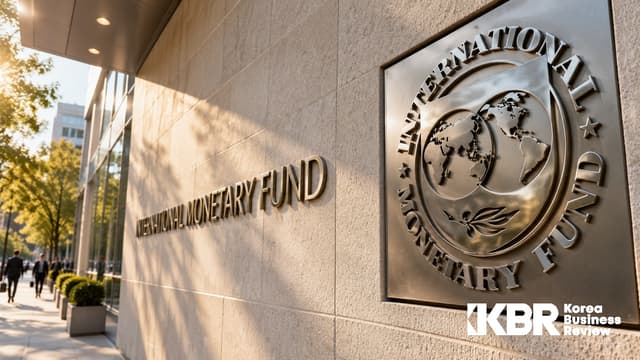
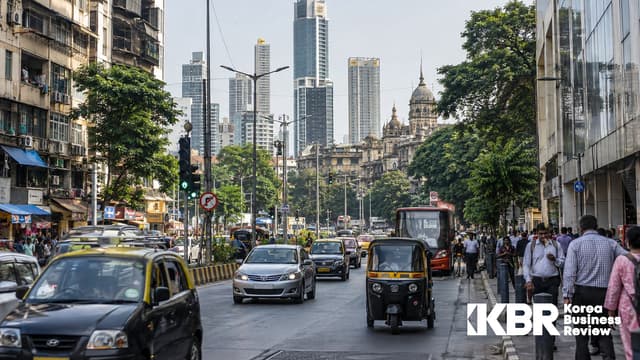
Due to IMF statistical revisions and the depreciation of the rupee, India's nominal GDP ranking has slipped to 6th, but its actual growth, consumption, and investment trends remain robust, continuously expanding its national scale. Amid US-China tensions, India has simultaneously advanced trade frameworks with the US and the EU, emerging as a core negotiation axis surrounding energy, tariffs, and digital norms. Manufacturing hub status is accelerating, with approximately one out of four Apple iPhones assembled in India, attempting to expand its electronics and semiconductor ecosystem based on PLI policies. Although the Indian stock market experiences high volatility due to foreign selling, rupee depreciation, and valuation burdens, its structure has become more robust than in the past due to domestic capital and the inclusion of government bonds in global indices. From South Korea's perspective, India's importance is growing beyond an export market into a production base and supply chain hub, while also being portrayed as a market where exchange rates, component ecosystems, and policy consistency risks must be managed together.
김민경 책임기자 · 07/02/2026

Biz / Investment
The Two Faces of the AI IPO Boom: China Surges Fivefold While OpenAI Delays Listing
In late June 2026, the global AI capital market flashed contradictory signals: a surge in AI and semiconductor IPOs in China alongside a plunge in semiconductor stocks triggered by reports of OpenAI delaying its public offering. In China, policy support and a strategy for technological self-reliance drove a boom in domestic listings for AI and semiconductor firms, accelerating industrial restructuring. Conversely, the possibility of OpenAI's delayed IPO and the sharp drops in Kioxia and SoftBank indicate that investors are beginning to rigorously scrutinize the profitability and listing timing of AI companies. While it remains difficult to definitively label the AI investment wave as either a bubble or an industrial restructuring, the market is shifting away from viewing AI as a monolith and is instead selecting companies backed by demonstrated real-world demand, cash flow, and contract quality. For South Korean memory manufacturers, this turning point offers opportunities through expanding High Bandwidth Memory (HBM) demand, but also amplifies volatility risks stemming from doubts over AI profitability, customer concentration, and rising energy costs.
류현진 선임기자 · 06/27/2026

AI / Tech
Global AI Smart Glasses: Current Status and the Breaking of Meta's Monopoly Among Samsung, Google, and China
Dismissed as premature following the 2013 failure of Google Glass, AI smart glasses have re-emerged as the fastest-growing consumer hardware category, with Omdia projecting shipments to reach 8.7 million units in 2025 (a 322% year-on-year increase). Meta, which defined the market with an 85% share in 2025 according to Omdia, took an early lead in the display segment with its $799 Ray-Ban Display and EMG wristband, and continued to dominate the market with a 69.2% share in the first quarter of 2026, according to IDC. Samsung and Google are counterattacking with the 'Android XR' platform, unveiling 'Intelligent Eyewear' at Google I/O in May. With South Korean brand Gentle Monster selected as a design partner and companies like Kakao and Naver joining in, South Korea has positioned itself at the forefront of the value chain. Chinese companies like Rokid and Alibaba are chasing the market with direct virtual screens and aggressive pricing, while Apple is not expected to release eyewear until 2027, reshaping the 2026 market from a Meta monopoly into a three-way battle. With average selling prices (ASPs) projected to drop by 40% within four years, the competitive axis is shifting from hardware to AI services and ecosystems, creating new opportunities for South Korean components, materials, and equipment (secondary) enterprises—such as displays, optics, SoCs, and batteries—as well as design and content partners.
강지혜 선임기자 · 06/22/2026

Global Economy
New Zealand's 'Brain Drain' Warning: Why Young People Are Leaving for Australia
According to Stats NZ data for the year ending March 2026, 62,800 citizens departed New Zealand, resulting in a net outflow of approximately 36,500, with 63% heading to Australia. The outflow was concentrated among young adults aged 18 to 30 (24,900 people, or 40%), driven by an income gap of around 1.5 times compared to Australia, an economic downturn, and low migration barriers such as the Special Category Visa (Subclass 444) which requires no prior application. While this massive exodus lowers short-term unemployment statistics, it creates a vicious cycle that erodes growth potential by losing young talent—in whom education investments were made—just as they reach the age of paying taxes and starting families. The relocation of former Prime Minister Jacinda Ardern to Sydney is cited as a symbol of this trend, solidifying a structure where job shortages trigger emigration, which in turn weakens momentum. The implication for South Korea is that population 'net growth' statistics can mask the outflow of youth and citizens, and that the pressure of overseas emigration among core talent in sectors such as semiconductors, secondary batteries, and AI must be managed from a long-term growth perspective.
박찬호 선임기자 · 06/16/2026