KBR 코리아비즈니스리뷰 · Section
KBR ANALYSIS
KBR+
KBR Research Notes
Exports Hit $98.3 Billion with Semiconductors Accounting for 48%: Three Signals Hidden Behind Record Highs
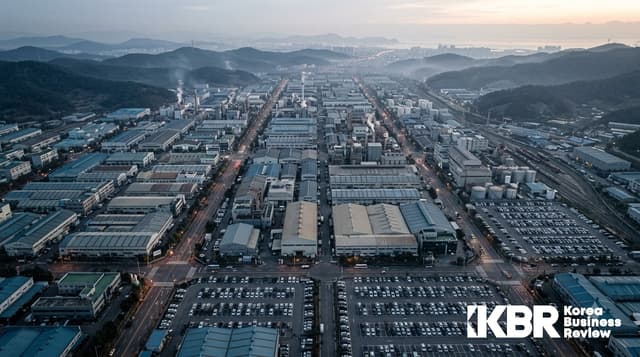
South Korea's exports in August 2026 reached $98.25 billion, up 68.7% year-on-year. Semiconductor exports stood at $46.65 billion, representing 47.5% of the total, with chips accounting for approximately 78.9% of the total export increase. While non-semiconductor exports also rose by 20%, automobiles and ships declined, and petroleum products and petrochemicals saw export values increase driven by rising unit prices despite dropping volumes. Cumulative exports surpassed last year's annual total as of September 5, but reaching the $1.0 trillion annual mark remains in the realm of projections. Businesses should examine their own propagation pathways—ranging from prices, volumes, and customers to cash collection—rather than focusing solely on total export figures.
류현진 선임기자 · 09/14/2026
Read more →
KBR Research Notes
The Era of 300,000 Foreign Students: Why Regional Universities Are Desperate to Attract Overseas Students
이태민 책임기자 · 09/13/2026

KBR Research Notes
2.87 Million Foreign Residents, 1.11 Million Employed: Foreign Labor Fills the Gaps in South Korea's Manufacturing Sector
이우리 선임기자 · 09/13/2026

KBR Research Notes
Gold Plunges 26% Yet Central Banks Buy 289 Tons… The Gold Price Outlook Is Unsettled
류현진 선임기자 · 09/10/2026

KBR Research Notes
8.5 Million SMEs but Only 7,000 New Jobs… 78% of Increased Enterprises are ‘One-Person Businesses’
김민경 책임기자 · 09/09/2026
KBR Research Notes
565,640 Startups: A Map of Declining and Growing Sectors
In the first half of 2026, newly founded startups totaled 565,640, a 1.5% decrease compared to the same period last year, marking a downward trend for the sixth consecutive year. Wholesale and retail startups led the overall decline, dropping by 10.7% (22,186 entities) to 185,409. Conversely, tech-based startups rose by 14.2% to 123,418, with information and communications startups surging by 59.4%. Although overall startup creation among individuals aged 39 and under decreased, tech-based and information and communications startups among youth saw sharp increases. The core takeaway is an industrial restructuring shifting from wholesale and retail toward knowledge-based sectors such as information and communications and professional services, rather than a simple overall drop in startups.
이지영 기자 · 09/05/2026

KBR Research Notes
2026 Employment Signals Seen Through National Pension Workplace Data: Where Did Jobs Increase?
In July 2026, the number of employed persons stood at 29,136,000, an increase of 108,000 from a year earlier, but this aggregate figure alone does not reveal which regions or industries experienced job growth. The 'National Pension Enrolled Workplace Details,' released monthly by the National Pension Service, contains legal-dong-level addresses, industry types, number of subscribers, newly acquired subscribers, and lost subscribers at the workplace level, serving as administrative data to fill this gap. However, it covers only corporations with 3 or more subscribers and individual businesses with 10 or more subscribers, primarily targets those aged 18 to 60 and under, and has a reporting time lag of about a month and a half. Thus, it should be read not as a substitute for aggregate employment figures, but as social insurance-based employment signals at the workplace level. The population difference is evident in actual statistics: in July 2026, manufacturing employment based on employment insurance fell by 3,000, marking a 14-month consecutive decline, whereas based on the Survey on Labor Conditions at Establishments, it increased by 14,000, marking a 7-month consecutive rise in the exact opposite direction. While aggregate indicators pointed to a recovery—with regular employment insurance subscribers increasing by 277,000 and establishment workers rising by 226,000—65.0% of the increase came from temporary and daily workers, and youth employment decreased for 45 consecutive months. Ultimately, the warmth of recovery is first verified not on national aggregates, but across a grid of si-gun-gu districts and industries, and National Pension workplace data provides that grid every month.
박소유 책임기자 · 08/29/2026
KBR Special Reports
South Koreans Drink 416 Cups of Coffee Per Capita Annually... The Current State of the 'Coffee Republic' and Key Market Watchpoints for 2026
According to Euromonitor, South Korea's per capita annual coffee consumption reached 416 cups in 2024, which is 2.7 times the global average. Combined domestic sales and exports of coffee products totaled 3.7359 trillion won in 2024, achieving an average annual growth rate of 5.2% over six years. In 2025, coffee import values surpassed 2조 won for the first time due to soaring green coffee bean prices and a rising exchange rate. International bean prices bottomed out in February 2026 before rebounding in August amid concerns over supply disruptions in Brazil, driving increased volatility. Conversely, National Tax Service statistics showed that the number of coffee shops declined for the first time in the first quarter of 2025, and clear profitability strains are evident as operating profits fall despite rising franchise sales. Sales impacts were confirmed following a Starbucks brand controversy in May, which saw weekly payment amounts drop by 26.3%. Around the same time, brands like The Venti and Mega MGC Coffee adjusted their prices, though the industry attributes these adjustments to complex cost factors such as exchange rates and bean prices rather than the controversy. Despite a high import-dependency structure, K-coffee exports continued their growth, with Israel surpassing China to become the largest export market starting in 2023.
강지혜 선임기자 · 08/13/2026

KBR Research Notes
Cash Disappearing from Wallets... Only 1 in 6 Payments Uses Cash: How Far Has the 'Cashless Society' Come?
According to a Bank of Korea survey, the proportion of cash payments among domestic adults stood at 15.9% by transaction count, plunging by about 61.5% over 11 years from 41.3% in 2013, leaving only 38.5% of that previous level. The year 2023 marked the first time (at 50.5%) that methods where physical cards are not presented surpassed physical cards in domestic merchant card transactions, with the gap widening further to 52.4% in 2024 and 54.3% in 2025. Simple payment services grew to an average of KRW 1.1053 trillion per day. According to parliamentary data, commercial bank ATMs decreased by approximately 7,700 units from the end of 2020 through mid-2025, with the reduction rate generally higher in regional areas than in Seoul. However, 88% of people still had experience using cash in face-to-face transactions within the past month, making the guarantee of cash accessibility a new policy challenge. On July 15, 2026, the Financial Services Commission officially designated Project Hangang Phase 2 as an innovative financial service, expanding participating banks to 9 and the deposit token holding limit per wallet to KRW 10 million, while the exact start date for live transactions has not yet been officially finalized.
김민경 책임기자 · 08/09/2026

KBR Research Notes
South Korean Game Market Reaches KRW 23.85 Trillion… Entering a 5-Year Phase of 'Moderate Expansion'
South Korea's domestic game industry sales in 2024 increased by 3.9% year-on-year to reach a record-high KRW 23.8515 trillion, but the growth rate dropped to 3.9% from 21.3% in 2020, signaling that the market has entered a phase of 'moderate expansion.' By sector, mobile games maintained more than half the share at KRW 14.071 trillion (59.0%), while console games posted the highest growth rate at 4.8%, indicating a shift in momentum toward console and PC blockbusters. Export values rebounded slightly to USD 8.50346 billion, maintaining the country's 4th place global market share at 7.2% behind China, the US, and Japan, while export diversification progressed with increased shares in North America and China. In 2025 corporate earnings, Nexon (KRW 4.5072 trillion) and Krafton (KRW 3.3266 trillion) achieved record-high performances, whereas companies like Kakao Games and Webzen struggled, sharpening the polarization based on the ownership of global IPs. In summary, the South Korean game market has already achieved growth in scale and now stands at a turning point moving toward a phase of 'qualitative competition' centered on IP and global competitiveness.
최수진 기자 · 08/02/2026