KBR 코리아비즈니스리뷰 · Section
INSIGHT 4.0
KBR+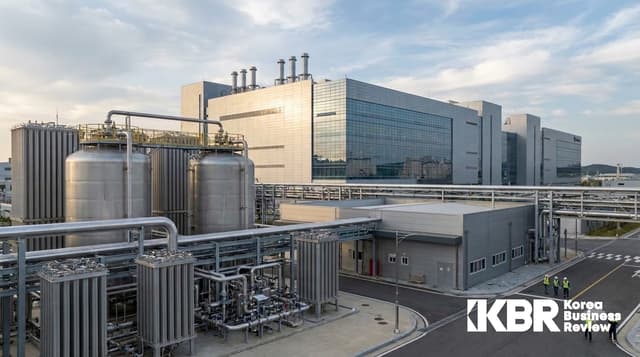
MANAGEMENT & STRATEGY
Why Four US Companies Invested $2 Billion in South Korea: The Strategy Behind Choosing Pyeongtaek, Asan, and Jindo
Four US corporations have reported a total of $2 billion in new investments in South Korea. Air Products and Axcelis are expanding their supply and manufacturing capabilities centered around Pyeongtaek, a semiconductor production hub. Corning is upgrading its Asan business site, cultivated for over 50 years, into a next-generation advanced materials production base. Pacifico Energy is pursuing the development of a 3.2 GW offshore wind cluster in the Jindo waters. The choices made by these four companies demonstrate that global enterprises invest heavily in locations dense with customers, supply chains, and power infrastructure rather than choosing countries at random.
류현진 선임기자 · 09/05/2026
Read more →
AI & DIGITAL INNOVATION
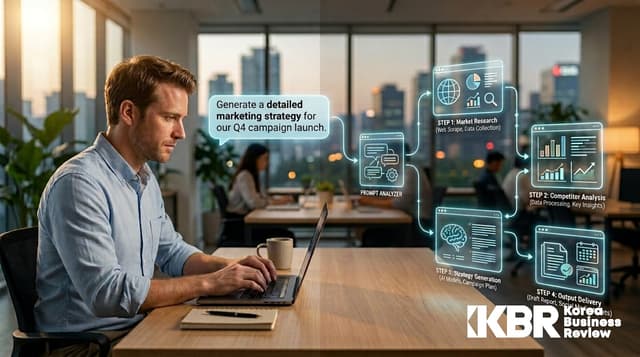
7 Operating Authorities CEOs Must Decide Before Adopting AI Agents
박소유 책임기자 · 08/21/2026
LEADERSHIP
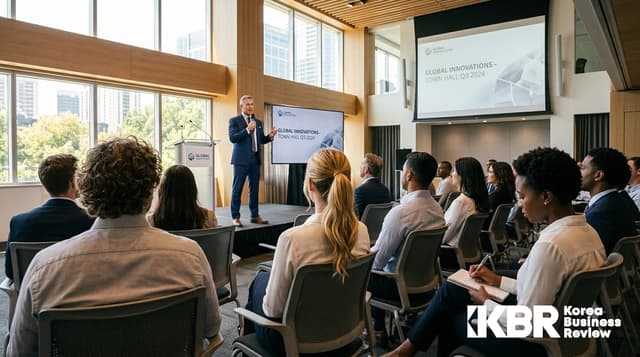
The Era of 20% Engagement: Five Areas Leaders Must Review Every Week
박소유 책임기자 · 08/12/2026

ORGANIZATION & HR
How to Design Competency Modeling Tailored to Your Organization
김민경 책임기자 · 08/10/2026

ORGANIZATION & HR
Can a Company Without an Org Chart or Reporting Structure Really Function?
박소유 책임기자 · 08/10/2026
AI & DIGITAL INNOVATION
Successful AX: What and How to Succeed — 5 Conditions That Determine Performance
Despite rising adoption rates, only a minority of companies are achieving tangible results from AI Transformation (AX). While South Korea's domestic AI adoption rate stands at 37.1% (65.1% for large enterprises, 35.6% for small and medium-sized enterprises), and about 90% of global companies invest in AI, only around 40% actually achieve financial performance. The core of successful AX is not introducing tools, but redesigning workflows themselves, backed by data preparation, governance frameworks, and employee readiness. Pre-defining measurable performance indicators allows pilots to scale enterprise-wide, and for SMEs, it is more realistic to start small with their 'most painful task' rather than mimicking large corporations. Ultimately, AX is not a technology project but an organizational transformation project, and the winners are determined by organizations that systematically build the fundamentals: workflows, data, governance, people, and measurement.
강지혜 선임기자 · 07/18/2026

ORGANIZATION & HR
Characteristics of Companies Where Employees Stay Long-Term — Respect, Not Salary, Drives Long-Term Employment
Statistics Korea data shows that the average duration of a youth's first job is only 1 year and 6.4 months, and Incruit data indicates that the primary cause of early resignation is not salary but 'job mismatch' (58.9%), demonstrating that the key to long-term employment lies in organizational culture. According to Gallup's 2026 report, global employee engagement stands at only 20%, and while a 'great stay' phenomenon driven by economic uncertainty is emerging in South Korea, this resembles defensive retention rather than voluntary engagement. Companies where employees stay long-term share five common traits: phased onboarding, systematic handover processes, non-aggressive managerial feedback styles, clear roles and responsibilities, respect for rest and leaving work on time, and a peer culture free of hazing. Notably, 70% of the variance in team engagement stems from managers, and as Google's Project Aristotle confirmed, 'psychological safety'—where mistakes and questions do not lead to punishment—forms the foundation of high-performing teams and long-term employment. Long-term employment is not a matter of chance, but the result of an operational system designed to 'respect people'; because salary can be a reason to join, but respect is the reason to stay, investing in organizational culture is ultimately a matter of profitability.
김민경 책임기자 · 07/10/2026

LEADERSHIP
What Problems Arise in an Organization Led by a Leader Without Principles?
A leader without principles refers to someone whose judgments in decision-making, evaluation, and resource allocation vary depending on situations and relationships without consistent criteria, continuously generating a cost called 'unpredictability' for the organization. According to DDI's 'Global Leadership Forecast 2025,' direct manager trust plummeted from 46% in 2022 to 29% in 2024, and Gallup surveys show global employee engagement dropping to 21%, numerically confirming the collapse of trust in leadership. The absence of principles destroys 'consistency,' which is the core of procedural fairness, spreading quiet quitting and office politics, while making leader reactions unpredictable, causing psychological safety and organizational execution to plummet simultaneously. An adverse selection structure is formed where key talent with many external options leaves first while constituents skilled in political survival techniques remain, leading the leader to prolong unprincipled leadership without recognizing the problem. The solution lies in codifying decision-making criteria, transparently explaining exceptions, disciplining reversal costs, and regularly reviewing principles, backed by organizational-level devices that reflect consistency indicators in multi-rater evaluations and promotion reviews.
박찬호 선임기자 · 07/07/2026

MANAGEMENT & STRATEGY
In an Era Overflowing with One-Person Startups, What Are the Conditions Needed to Survive?
According to a survey by the Ministry of SMEs and Startups, domestic solo creative businesses surged by 15.4% year-on-year to exceed 1.16 million, while globally, solo startups are estimated to account for about 36% of new ventures. Success stories of ultra-small organizations, such as Gumroad (generating $23.8 million in revenue after dissolving its staff) and Base44 (sold for $80 million with 8 employees), have proven the viability of 'AI-driven one-person enterprises.' The first condition for survival is not AI technology itself, but 'problem definition capability,' with practical career-experienced founders equipped with industrial expertise (domain knowledge) emerging as the new mainstream. The second condition is orchestration capability, operating AI not as individual tools but as a 'virtual organization,' where context engineering serves as a substitute for organizational strength. The third condition is niche focus and capital efficiency, with the power to endure the average 29.8-month 'death valley' until reaching the breakeven point stemming from low fixed costs and reliable revenue sources.
류현진 선임기자 · 07/04/2026

AI & DIGITAL INNOVATION
How AI Agents are Changing the Way We Work: Digital Transformation is About 'Work Redesign,' Not 'Tool Adoption'
As AI agents spread in 2026, corporate digital transformation challenges are shifting from simply introducing AI tools to redesigning work processes themselves. Although many companies have adopted generative AI, only a small number have translated this into actual revenue and cost-saving results, revealing a wide gap between adoption rates and performance. Unlike simple response-based chatbots, AI agents understand goals, plan tasks, and execute them, requiring delegation, accountability, and review systems to be designed together. Major South Korean conglomerates such as Samsung, SK, and LG are also viewing AI as an enterprise-wide work innovation platform, simultaneously pursuing organizational restructuring, talent acquisition, and governance reorganization. Ultimately, the core factor dividing AI performance is not the performance of the tool, but the capability to redesign workflows so that agents operate within actual work processes.
최수진 기자 · 06/27/2026