KBR 코리아비즈니스리뷰 · Section
KBR NEWS
Free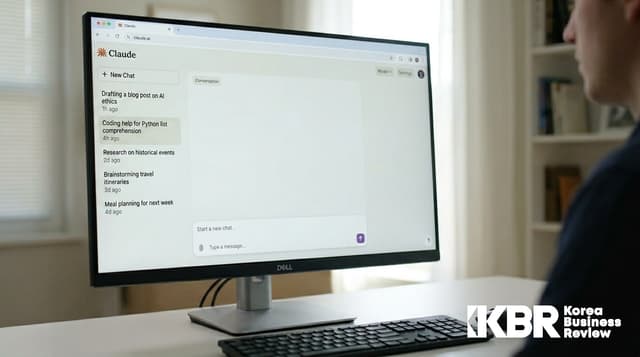
DEEP ANALYSIS
Claude Fable 5 Returns in 19 Days: Why the First Commercial AI Switched Off by the U.S. Government Came Back on July 1 with New Safeguards
Anthropic's top-tier model, Claude Fable 5, returned globally on July 1, 19 days after its service was suspended. Launched on June 9, the service was completely halted three days later when the U.S. Department of Commerce imposed export controls following a 'jailbreak' report by Amazon researchers. Anthropic contested the basis of the action, arguing that other models yield the same results, and engaged in negotiations with the government for about two weeks. As a condition for the return, a new classifier capable of blocking the technique by over 99% was introduced, with Opus 4.8 responding in its place when blocked. Marking the first export control case applied to commercial AI, the incident leaves behind tasks such as refining AI regulatory procedures and the need for corporate model diversification.
강지혜 선임기자 · 07/02/2026
Read more →
ISSUE BRIEFING
Gasoline Prices Heading Down to the 1,800-Won Range? Government Cuts Maximum Oil Prices for the First Time
이지영 기자 · 06/27/2026

ISSUE BRIEFING
Sole Proprietor Loan Overdue Dues Reach 14.6 Trillion Won… Era of 1 Million Closings, Alley Businesses Surviving on Debt
김민경 책임기자 · 06/24/2026
DEEP ANALYSIS
Another Workplace After Clocking Out: A Growing Number of 4050 Breadwinners Are Working Second Jobs
강지혜 선임기자 · 06/24/2026

ISSUE BRIEFING
Government to Clear KRW 2.2 Trillion in Small Business Guaranteed Debt, Reopening Paths to Recovery Blocked by Arrears
이우리 선임기자 · 06/22/2026
DEEP ANALYSIS
Semiconductor Exports Surpass 41%, KOSPI Breaks 9,000 for the First Time... Exchange Rates and Interest Rates Move in Tandem
Exports for June 1-20 reached a record high of $62.0 billion, with semiconductors surging 188% to account for 41.2% of total exports, further deepening reliance on a single item. While an AI data center-driven memory boom is the core growth driver, heavy reliance on unit price gains has sparked warnings over market concentration and debt-fueled stock investments despite the KOSPI breaking 9,000 for the first time. As semiconductors race ahead, traditional manufacturing like autos and machinery alongside construction remain sluggish, creating clear inter-industry polarization and a persistent disconnect where the warmth of the boom fails to trickle down to domestic consumption. The won-dollar exchange rate dropped to 1,508 won following the US-Iran peace MOU before turning weak to 1,529-1,538 won amid Fed tightening signals, reflecting a decoupling phenomenon of a weak won during a stock market rally. With rate hike possibilities (from 2.50% to 2.75%) being discussed for the July Monetary Policy Board meeting due to exchange rate and energy-led inflationary pressures, the South Korean economy finds itself in a complex phase carrying triple variables of exchange rates, interest rates, and energy simultaneously.
최수진 기자 · 06/22/2026

DEEP ANALYSIS
Not Just Due to Regulations: 4 Reasons Why Uber and Grab Do Not Work in South Korea
The absence of Uber and Grab cannot be explained by a single line stating they were blocked by regulations. While private car ride-sharing services like UberX are illegal under the Passenger Transport Service Act, Uber remains in a transformed state as a 'taxi-hailing app' rather than fully withdrawing, and Grab never entered South Korea in the first place. The 'Tada incident' was a critical turning point; even though the court ruled it legal, the passage of the anti-Tada law in the National Assembly in 2020 and its dismissal by the Constitutional Court solidified the reality that mobility services operating outside the traditional framework of taxis struggle to survive in South Korea. Uber's sluggish performance was also a strategic miscalculation. Its 'occupy first, negotiate later' approach clashed with the organized taxi industry and dense public transportation, whereas Kakao secured over 90% of the market with 'Kakao T,' which embraced existing taxis (recording approximately 13.58 million MAU as of February 2026). Uber's counterattack in 2026 also failed to narrow the gap; users who briefly increased through the Uber One subscription and Naver partnership dwindled back to about 650,000 as the 'Naver effect' faded, leading Uber to pivot toward niche strategies such as foreign and tourist demand and 'Uber rental.' Autonomous driving has emerged as a variable that will shake all balances anew. With robotaxis becoming commonplace in the U.S. and China, and the Bank of Korea suggesting regulatory relaxation, the full-scale realization of robotaxis will inevitably force a reexamination of the logic behind the current Passenger Transport Act, which has blocked private vehicle operations.
강지혜 선임기자 · 06/18/2026

ISSUE BRIEFING
The AI Job Threat Started with the 'Door That Closes First': Data-Identified Occupations Most Vulnerable to Shaking
In May 2026, U.S. layoffs reached their highest level since the pandemic at 97,000, with about 40% citing AI as the primary reason (surging from 7% in January to 40% in May), although prudent voices suggest AI may sometimes be used as a convenient excuse. The first sign of the AI shock is not mass layoffs, but rather barriers to entry for youth; employment rates for 22- to 25-year-olds in high AI-exposure jobs in the U.S. fell by about 14% compared to 2022. Clerical and administrative jobs are being most directly shaken: about 86% of the roughly 6.1 million high-exposure, low-adaptability workers in the U.S. are women, and similar signals are being captured in Europe (such as Ireland at 7% and Meta cutting 8,000 jobs). In South Korea, youth jobs shrank by 211,000 over the past three years (208,000 of which were in high AI-exposure industries) while jobs for those in their 50s increased by 209,000, leading the Bank of Korea to diagnose this as 'seniority-biased technological change'—matching the direction seen in the U.S. However, the WEF projects 92 million jobs replaced and 170 million created by 2030 (a net increase of 78 million), indicating that the core question is not whether jobs will disappear, but who will adapt first and how.
류현진 선임기자 · 06/16/2026

KBR News
Why Claude Fable 5 Stopped: It Was Not a 'Technical Bug,' but a US Government Export Control Order
Anthropic's top-tier AI models, 'Claude Fable 5' and 'Claude Mythos 5,' were blocked for global users just three days after launch due to US government export control directives. Although the core of the guideline was 'blocking foreign access,' Anthropic explained that it was technically difficult to apply this selectively, forcing them to shut down access for all users. While the government took issue with the potential for 'jailbreaking' to bypass model safety guardrails, Anthropic countered that the vulnerability in question was exaggerated and exists across the industry as a whole. This incident demonstrates that frontier AI models are no longer mere technical services, but direct targets of national security and export controls. It also confirms that Korean companies relying excessively on specific AI models or single suppliers may be exposed to service disruption risks resulting from policy shifts.
KBR 편집부 · 06/15/2026

DEEP ANALYSIS
Seoul Metropolitan Area Apartments Clash Between Record-Breaking Regulations and Record-Breaking Supply Shortages
Following the June 27 loan regulations and October 15 expansion of regulated zones in the second half of 2025, combined with the resumption of the heavy capital gains tax surcharge in May 2026, unprecedented multi-layered regulations are currently operating in the Seoul metropolitan area. However, one year after the resumption of the heavy tax surcharge, apartment listings in Seoul have decreased by about 10%, while price growth has actually expanded to the 0.2-0.3% range, demonstrating a phenomenon of 'price strength amid locked listings.' The jeonse (lump-sum lease) market is also unstable, with Seoul's cumulative apartment jeonse increase reaching approximately six times that of last year (3.77%), underpinning sales prices from below. The root cause is a shortage of supply: Seoul's move-in volume for 2026 is projected to drop 48% year-on-year to about 16,000 households, marking the lowest level nationwide in 13 years. As strengthening holding taxes, such as raising the comprehensive real estate holding tax and reducing long-term holding special deductions, are being discussed as the next regulatory cards, deliberations on tax law amendments in the second half of the year are expected to be a watershed moment for the market.
강지혜 선임기자 · 06/11/2026