KBR 코리아비즈니스리뷰 · Section
GLOBAL RADAR
KBR+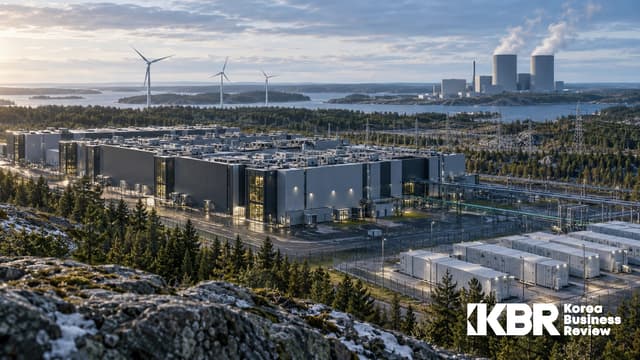
AI / Tech
Why Did Google Contract with Nuclear Power Plants? The Power Grid Map of the AI Competition
On September 9, Google announced a plan to invest 13,000 million euros in Finland's digital infrastructure, clean energy, and collaborative projects. Google and Fortun's 22-year nuclear power purchase agreement is structured to begin small-scale supply in 2028 and expand to about 50% of the nuclear capacity from 2030 to 2049. Constellation signed a 20-year power purchase agreement with Microsoft in 2024 and announced plans to restart Unit 1 of the Three Mile Island nuclear plant. Talen and Amazon's expanded agreement in 2025 totals 1,920 MW based on full supply, with the announcement at the time expecting to reach full volume by 2032 at the latest. Google's India AI hub announced in 2025 is a plan to invest approximately $15,000 million from 2026 to 2030 to build data center, energy, and telecommunications infrastructure.
박소유 책임기자 · 09/14/2026
Read more →
AI / Tech
Waymo at 500,000 Weekly Rides, Tesla Cybercab... The Autonomous Driving War Has Truly Begun
박찬호 선임기자 · 09/10/2026

AI / Tech
Qualcomm and Amazon Partner on AI Chips Tied to Up to $60B: Will Nvidia's Monopoly Be Shaken?
이지영 기자 · 09/09/2026

AI / Tech
GPT-6 Astra Reignites 'AI Replacement' Fears: Why the U.S. is Nervous First and the Impact on South Korean Industry
류현진 선임기자 · 09/09/2026

AI / Tech
Why NVIDIA Bet $12.9 Billion on Hugging Face: The Reality of Open-Weight AI
KBR 편집부 · 09/05/2026
Global Economy
US Manufacturing PMI at 54.6: Why Costs Refuse to Fall Despite Slowing New Orders
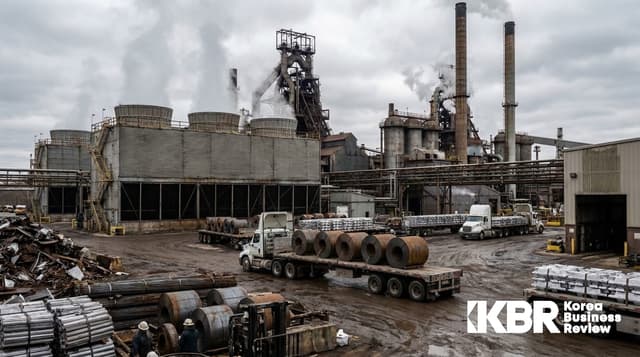
The US manufacturing PMI for August stood at 54.6, remaining above the threshold of 50 to continue its expansion phase, though down from July. The new orders index fell to 53.7, indicating that while demand is still growing, the pace of growth is slowing. The prices paid index stayed high at 71.1, matching July's level and showing that manufacturers' cost pressures are not easily easing. Tariffs, energy prices, electronic component supply issues, and labor costs are acting simultaneously, creating a pattern of slowing orders coupled with rising costs. Korean companies need to examine changes in US orders, tariff structures, inventory replenishment demand, and local cost shifts on a category-by-category basis.
강지혜 선임기자 · 09/05/2026
Biz / Investment
From 44% to 70%: How a Single Remark from NVIDIA Upended the AI Infrastructure Landscape
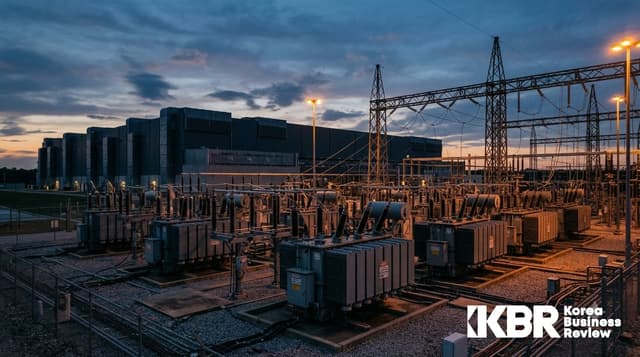
Nvidia reported fiscal Q2 2027 revenue of $96.221 billion (+106%) and data center revenue of $89.0 billion (+117%), beating both market consensus and its own guidance. CFO Colette Kress provided a preliminary outlook for fiscal 2028 revenue growth of approximately 70% during the earnings call—not an official formal guidance, but an unusual statement far exceeding the existing analyst consensus of 44-45%. The company explained that 70% is a figure reflecting supply constraints, and customer demand forecasts point to roughly double that level. Gross margins were guided down to 71-72% in Q4—with the direct cause being memory costs rather than competition, interpreted as a sign of strengthened pricing power for Samsung Electronics and SK Hynix. AWS plans to deploy 2 million additional GPUs from 2027 to 2028 (this quarter to fiscal Q2 2029), and order backlogs for South Korea's three major power equipment makers have exceeded 36 trillion won, though the $500 billion capital financing platform with six financial institutions is still in the promotion stage prior to final contracts amid an ongoing circular financing debate.
류현진 선임기자 · 08/29/2026
AI / Tech
Where Do Advanced Global Companies Stand on AI Transformation? The Widening Gap Between 'Deep Transformation' (34%) and 'Surface-Level Adoption' (37%)
According to a Deloitte survey conducted in August–September 2025 and released in January 2026, only 34% of global enterprises are in the deep transformation stage of fundamentally reimagining business models with AI, while 37% remain at surface-level adoption, revealing a stark performance gap. A McKinsey survey released in November 2025 shows that while 88% use AI, enterprise-wide value creation remains limited to a few, with only 39% reporting an impact on EBIT (mostly under 5 percentage points of improvement). JPMorgan Chase has accumulated nearly a decade of experience since 2017—from COiN (saving 360,000 hours annually) to the 2024 LLM Suite (deployed to over 230,000 employees)—now operating 450 use cases, with CEO Jamie Dimon citing up to $2 billion in annual business value. Siemens leads manufacturing AX with industrial AI agents and digital twins, establishing 2026 as a 'starting point' with its Erlangen plant as the initial blueprint, alongside a successful 8-hour autonomous logistics demonstration using humanoid robots in April. Common traits among high-performing companies include workflow redesign, proactive governance, and parallel growth goals, while key focal points for the second half of the year include the disparity in adoption speeds across industries (including healthcare's 'fast to explore, slow to deploy' pattern) and the standardization of ROI measurement frameworks.
이우리 선임기자 · 08/12/2026

AI / Tech
Where Does China's Manufacturing AI Automation Stand? The Gap Between Mass Robot Deployment and Early Humanoid Commercialization
According to the IFR, 54% of global new industrial robot installations (approximately 295,000 units) were concentrated in China in 2024, and production in the first half of 2025 increased by 35.6% year-on-year, sustaining the growth trend. Humanoids remain in the early commercialization stage; UBTech's contract with Airbus is a single-robot proof-of-concept, and its breakthrough past "1,000 units produced" actually translates to about 500 units delivered. UBTech itself stated that the work efficiency of the Walker S2 reaches at most half that of a human, and over 70% of Unitree's revenue comes from research and education rather than industrial applications. The IFR recalculated China's robot density from 470 down to 166, not because the number of robots decreased, but as a result of updated manufacturing employment statistics. KBR analyzes that South Korea must respond to China not through a robot "headcount" competition, but through the speed of ecosystem design encompassing data, standards, and supply chains.
강지혜 선임기자 · 08/10/2026
Biz / Investment
The 'NATO Wall' That Swallowed 60 Trillion Won: Why Canada Chose Germany Over Hanwha Ocean
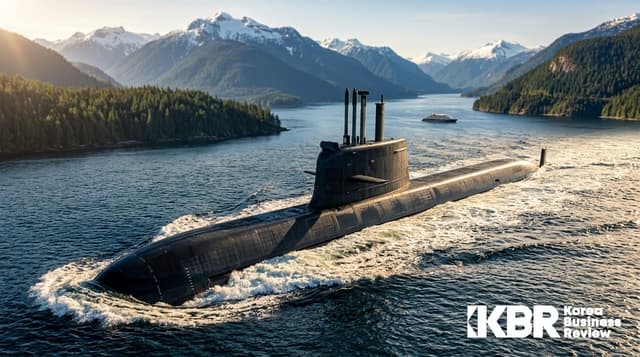
On July 6, Canada selected Germany's TKMS as the preferred bidder for its 60 trillion won Canadian Patrol Submarine Project (CPSP), leaving Hanwha Ocean as the reserve negotiator. The core of the decision was Canada's strategic judgment regarding NATO interoperability, Arctic operation optimization, and strengthened European security cooperation, rather than performance alone. While Hanwha Ocean's KSS-III led in battle-tested deployment and fast delivery, TKMS won with a CAD 167 billion economic package and a joint Germany-Norway fleet configuration. Immediately after the announcement, Hanwha Ocean's stock plummeted over 20%, but securities firms maintained a 'buy' rating, evaluating it as a supply-and-demand issue rather than a fundamental flaw. Key checkpoints ahead include the Canada-TKMS main contract negotiations (6-18 months), follow-up projects in Poland and the Middle East, and the materialization of North American MRO and MASGA initiatives.
최수진 기자 · 07/12/2026