

AI / TECH
Where Does China's Manufacturing AI Automation Stand? The Gap Between Mass Robot Deployment and Early Humanoid Commercialization
According to the IFR, 54% of global new industrial robot installations (approximately 295,000 units) were concentrated in China in 2024, and production in the first half of 2025 increased by 35.6% year-on-year, sustaining the growth trend. Humanoids remain in the early commercialization stage; UBTech's contract with Airbus is a single-robot proof-of-concept, and its breakthrough past "1,000 units produced" actually translates to about 500 units delivered. UBTech itself stated that the work efficiency of the Walker S2 reaches at most half that of a human, and over 70% of Unitree's revenue comes from research and education rather than industrial applications. The IFR recalculated China's robot density from 470 down to 166, not because the number of robots decreased, but as a result of updated manufacturing employment statistics. KBR analyzes that South Korea must respond to China not through a robot "headcount" competition, but through the speed of ecosystem design encompassing data, standards, and supply chains.
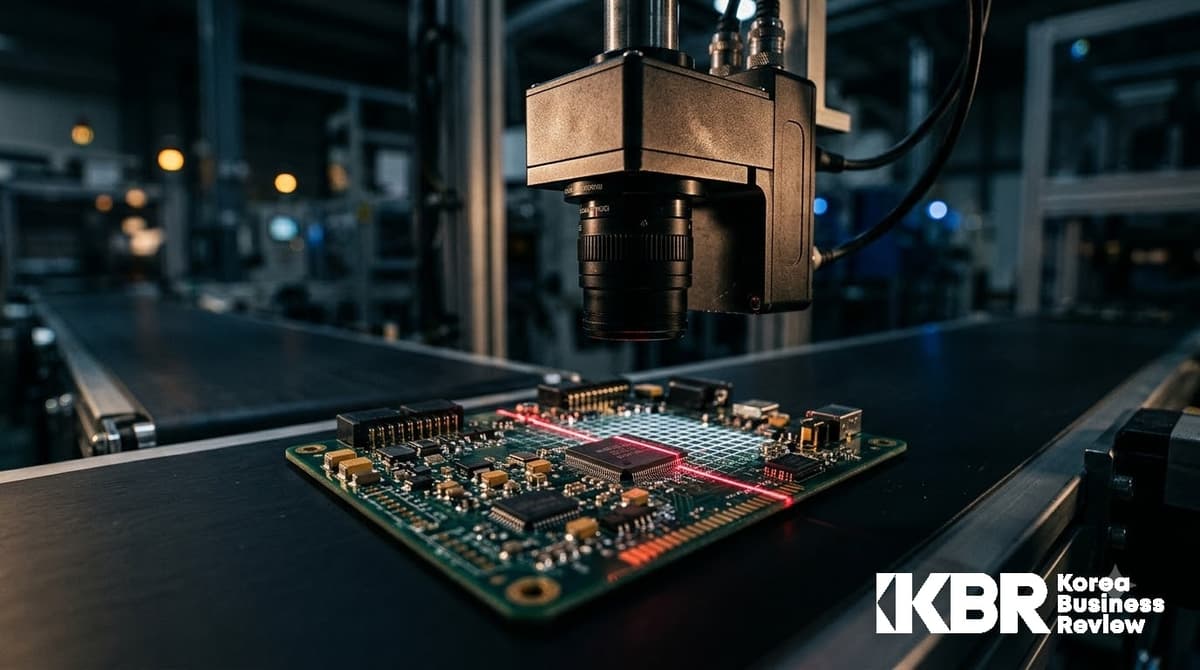
Industrial Robots Have Already Expanded to the World's Largest Scale While Humanoids Remain in the Pilot Stage: Production Forecasts and Field Operations Must Be Viewed Separately Artificial intelligence (AI) automation in China's manufacturing sector moves at different speeds depending on the domain.…
KBR Access
Read this Global Radar article now
Buy this article for ₩3,900 (30 days of access), or get KBR+ 10 — 10 paid articles for ₩9,900 (₩990 each). KBR Members (free sign-up) read one paid article free every month.
✓ No account needed · Checkout is in Korean
Best value
KBR+ 10 · ₩9,900
An insight pass that opens 10 KBR+ articles, one at a time, whenever you like
10 KBR+ articles including KBR Analysis — ₩990 each. Use them within 60 days.
Get KBR+ 10KBR NEWSLETTER
Sign up for free and get the KBR Newsletter!
Sign up and opt in to the newsletter to receive KBR's curated business and economic insights by email.
LATEST IN TOPIC
Latest in this topic



Related Content
A Different Starting Point for Entrepreneurship Found in Small Business Successions in Japan: Taking Over Customers and Equipment First
KBR+IMF Projects 3.1% Global Growth: Why Korean Companies Must Separate Demand from Costs
KBR+60% of U.S. Small Business Online Borrowers Say Costs Were Higher Than Expected
KBR+Delta Air Lines Sees Rising Revenue but Lower Operating Margins: A Revenue Structure That Withstands High Fuel Costs