KBR 코리아비즈니스리뷰 · Section
ESG MARKET & CASES
KBR+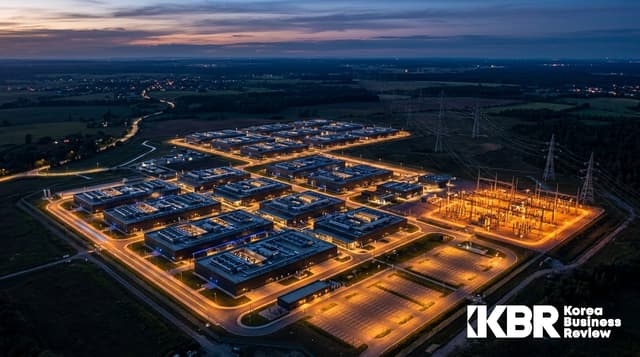
ESG MARKET & CASES
A New ESG Issue in the AI Era: How Data Center Power and Water Consumption Are Changing Corporate Sustainability
Driven by the proliferation of AI, global data center electricity demand is projected to surge from 415 TWh in 2024 to approximately 700 to 1,300 TWh by 2030 (945 TWh under the IEA baseline scenario), with demand for AI-specific data centers expected to increase approximately threefold over the same period. Water consumption per prompt varies significantly depending on the measurement methodology, ranging from about 0.26 mL (five drops of water) based on actual Google Gemini measurements to about 45 mL based on Mistral disclosures, while total global data center water consumption could rise from approximately 560 billion liters in 2023 to about 1.2 trillion liters by 2030. Microsoft reported that its total emissions increased by 23.4% compared to 2020 due to AI and cloud expansion, with Scope 3 (indirect emissions) accounting for approximately 97% of the total, bringing resource efficiency across the supply chain to the forefront as a key challenge. Domestic data center electricity demand is expected to grow at an annual average of 11% through 2028, and power applications for data centers in the Seoul metropolitan area alone reach approximately 20 GW (equivalent to 20 nuclear power plants), pointing to grid bottlenecks and supply imbalances as structural risks. The KSSB finalized Sustainability Disclosure Standards Nos. 1 and 2 based on the ISSB in February 2026, and under the Financial Services Commission's roadmap draft, ESG disclosures are scheduled to become mandatory for KOSPI-listed companies with assets of 30 trillion won or more starting in 2028, making data center power and water usage a 'disclosure item right next to the financial statements.'
박소유 책임기자 · 06/27/2026
Read more →
ESG MARKET & CASES
ESG Dedicated Organizations: Time to Establish or Disband?
이지영 기자 · 06/22/2026

ESG MARKET & CASES
Casebook on ESG Controversies: How Rating Downgrades, Boycotts, and Lawsuits Occur
KBR 편집부 · 06/16/2026
ESG MARKET & CASES
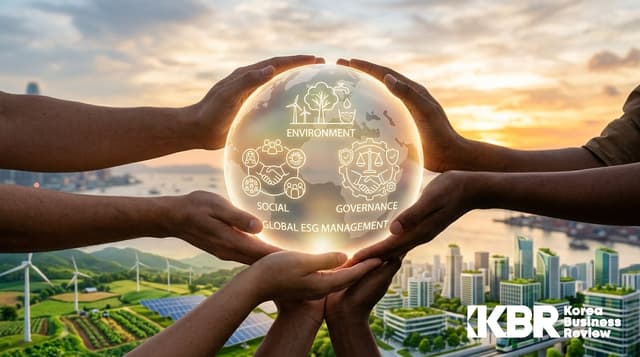
ESG Management: The U.S. Retreats, Europe Simplifies, and South Korea Finally Reaches the Starting Line
강지혜 선임기자 · 06/15/2026

ESG MARKET & CASES
Examining ESG Among Global Enterprises: Strategies and Realities of Leading Companies
강지혜 선임기자 · 06/10/2026
ESG MARKET & CASES
The Illusion That "K-ETS Makes Us Fine": The Blind Spot Revealed by CBAM Article 9
In the first full-scale year of the EU Carbon Border Adjustment Mechanism (CBAM), the common belief that "having K-ETS means we are fine" is only half true. The real level of protection is determined not by possessing a system, but by the actual carbon price paid and the quality of verified data. As the EU CBAM entered its full operational phase on January 1, 2026, the long-held assumption inside Korean industry that the K-ETS would largely offset burdens at the EU border has necessitated a reassessment. According to European Commission guidance, CBAM operated as a transitional phase focused purely on reporting obligations from October 1, 2023, to December 31, 2025, but transitioned to a cost system requiring importers to purchase and surrender certificates starting in 2026. The core issue is not whether South Korea operates an emissions trading system, but what carbon costs the EU actually recognizes under CBAM.
김민경 책임기자 · 06/09/2026

ESG MARKET & CASES
The Reshaping of ESG: 2026 Ushers in the 'Era of Trust'
A quiet revolution is underway. As of 2026, the global landscape surrounding ESG appears superficially fractured. Anti-ESG sentiment is surging at the U.S. federal level, and policy shifts by the Trump administration are casting uncertainty over the sustainable finance market.
류현진 기자 · 04/23/2026

ESG MARKET & CASES
The Evolution of ESG in 2026: From 'Declarations' to 'Execution', Capital is Already Moving
Morningstar projects that U.S. data center power demand will increase about threefold by 2030, with renewable energy coverage estimated at only around 25%. Is ESG dead, or has it evolved? As of 2026, an increasing number of companies are hesitant to openly use the word 'ESG' itself.
이우리 기자 · 04/16/2026
ESG MARKET & CASES
Waste Plastic Recycling: Not a Choice, but Survival — The Intersection of Global Regulation and Industrial Transition
350 million tons every year, mostly ending up underground. The volume of waste plastic generated worldwide is massive. According to the OECD's 'Global Plastics Outlook' report, global plastic waste generation in 2019 was estimated at approximately 353 million tons, and without policy changes, it is projected to surge to the 1 billion-ton level by 2060.
이태민 기자 · 04/13/2026