
MANAGEMENT ARTICLE
Can an Organization Grow Without Delegation? Gallup and McKinsey Data Reveal the Upper Limit of Growth
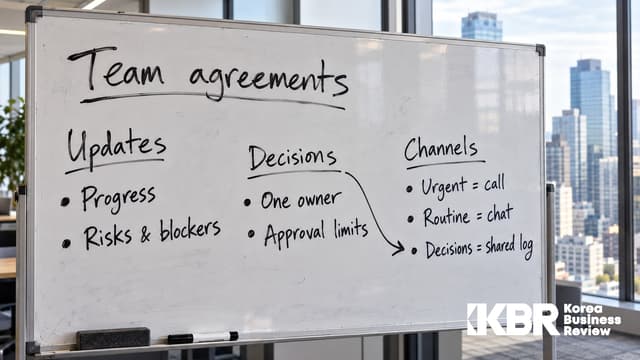
The upper limit of growth is a leader's capacity to delegate — A 2014 Gallup study of 143 Inc. 500 CEOs showed that executives with high delegating talent achieved a 3-year growth rate of 1,751%, outperforming peers by 112 percentage points, and generated 33% higher revenue in 2013 ($8 million vs. $6 million). The 2026 managerial collapse heightens the urgency of delegation — The Gallup 2026 report showed manager engagement dropped from 27% to 22%, the largest decline on record for managers, demonstrating that the middle-management model of bearing responsibility without authority has reached its limit. Delegation creates a multiplier effect on decision-making — In a benchmark study by McKinsey, organizations combining empowerment and coaching were 3.2 times more likely to have delegated decisions that were both high-quality and fast, while outperforming peers in financial performance. In the AI era, delegation has become a talent strategy — According to Deloitte's 2026 report, 7 out of 10 leaders cited agility as a core strategy, and because judgment cannot be cultivated without the experience of delegation, delegation is a prerequisite for talent development in the AI era. Delegation must be a system, not a decision — Four principles—categorizing decisions, result-oriented delegation, accompanying coaching, and safe spaces for failure—transform delegation from an individual leadership trick into an organizational capability.

Can an Organization That Fails to Delegate Really Grow? In an organization where a leader holds all the decisions, the leader's limitation becomes the organization's limitation.…
KBR Access
Read this KBR Article article now
Buy this article for ₩3,900 (30 days of access), or get KBR+ 10 — 10 paid articles for ₩9,900 (₩990 each). KBR Members (free sign-up) read one paid article free every month.
✓ No account needed · Checkout is in Korean
Best value
KBR+ 10 · ₩9,900
An insight pass that opens 10 KBR+ articles, one at a time, whenever you like
10 KBR+ articles including KBR Analysis — ₩990 each. Use them within 60 days.
Get KBR+ 10KBR NEWSLETTER
Sign up for free and get the KBR Newsletter!
Sign up and opt in to the newsletter to receive KBR's curated business and economic insights by email.
LATEST IN TOPIC
Latest in this topic


Related Content