

KBR 코리아비즈니스리뷰 · Section
ESG
KBR+
ESG Policy & Strategy
EU Food Waste Reduction Targets: Food Companies Must Change the Structures That Cause Waste, Not Just Measure What Is Thrown Away
The European Union's food waste reduction targets handle total manufacturing volumes and per capita consumption volumes differently. To connect these targets to corporate operations, companies must change both the root causes of waste and their production, delivery, and sales decisions together.
KBR경영연구소 · 09/26/2026
Read more →
ESG Policy & Strategy
Apple's 30% Recycled Materials: What Supply Chains Must Prove Beyond 'Eco-Friendly' Raw Materials
김민경 Editor · 09/24/2026
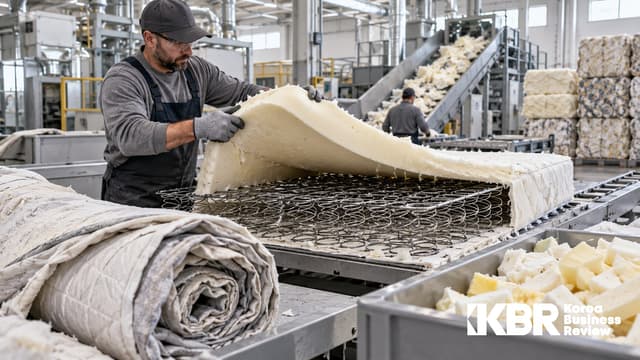
ESG MARKET & CASES
Recycling 2 Million Mattresses Is Not the End: Raw Materials and Market Channels That Determine Circular Economy Profits
박소유 Editor · 09/20/2026

ESG Policy & Strategy
Why UNEP's Redrawn 'Exceeding 1.5°C' Pathway Demands Corporate Climate Strategies Combine Mitigation and Adaptation
KBR 편집부 · 09/18/2026

ESG MARKET & CASES
Better Water Use Efficiency Doesn't Eliminate Scarcity: Corporate Water Management Through the Lens of Microsoft
류현진 Editor · 09/18/2026
ESG MARKET & CASES
Patagonia's Circular Economy Blind Spot: Tasks Left After 170,000 Repairs
Examining Patagonia's repair records alongside the challenges of the end-of-use stage, and connecting the circular economy to decisions in product design, service profit and loss, and collection systems.
KBR경영연구소 · 09/17/2026

ESG MARKET & CASES
Does Changing Eco-Friendly Materials Guarantee Success for Reusable Packaging? Return Rates and Logistics Determine Business Viability
An analysis of the business viability of reusable packaging based on return rates, travel distance, washing capacity, and inventory status. The conditions for collaborative operation are explained using research from the Ellen MacArthur Foundation and repeated-return calculation examples.
이태민 Editor · 09/16/2026

ESG Policy & Strategy
Why Safety Inspections End but Improvement Measures Remain
Execution management for small and medium-sized enterprise (SME) leaders and managers: how to connect completion checkmarks on checklists to actual risk reduction on site.
박소유 Editor · 09/16/2026

ESG Policy & Strategy
Reducing Wasted Ingredient Costs in Purchase Orders Rather than ESG Reports
We examine how to connect food waste reduction to ordering, preparation, serving volumes, and cost control. The article distinguishes between UNEP global estimates and facility-level waste rates, and proposes operational strategies to measure waste volume reduction, disposal route changes, and cost savings respectively.
강지혜 Editor · 09/15/2026

ESG Policy & Strategy
The EU Reduced ESG Regulations… Costs Companies Must Cut Now and Data They Must Keep to the End
The EU has streamlined ESG regulations by narrowing the scope of the CSRD and CSDDD to ease corporate reporting and due diligence burdens. However, being excluded from regulatory scope does not mean that actual business risks, such as energy, safety, and supply chains, disappear. South Korean companies should not apply EU regional standards as-is, but rather evaluate applicability by dividing their operations into headquarters, EU subsidiaries, sales regions, and group structures. While unnecessary reports and duplicate data submissions should be curtailed, it is necessary to maintain calculation grounds and raw data for core indicators such as emissions, energy, and safety. The core of ESG budget restructuring is not uniform cuts, but reducing reporting costs while retaining the information required for management decision-making and risk management.
이우리 선임기자 · 09/14/2026