

What Is Zero-Click
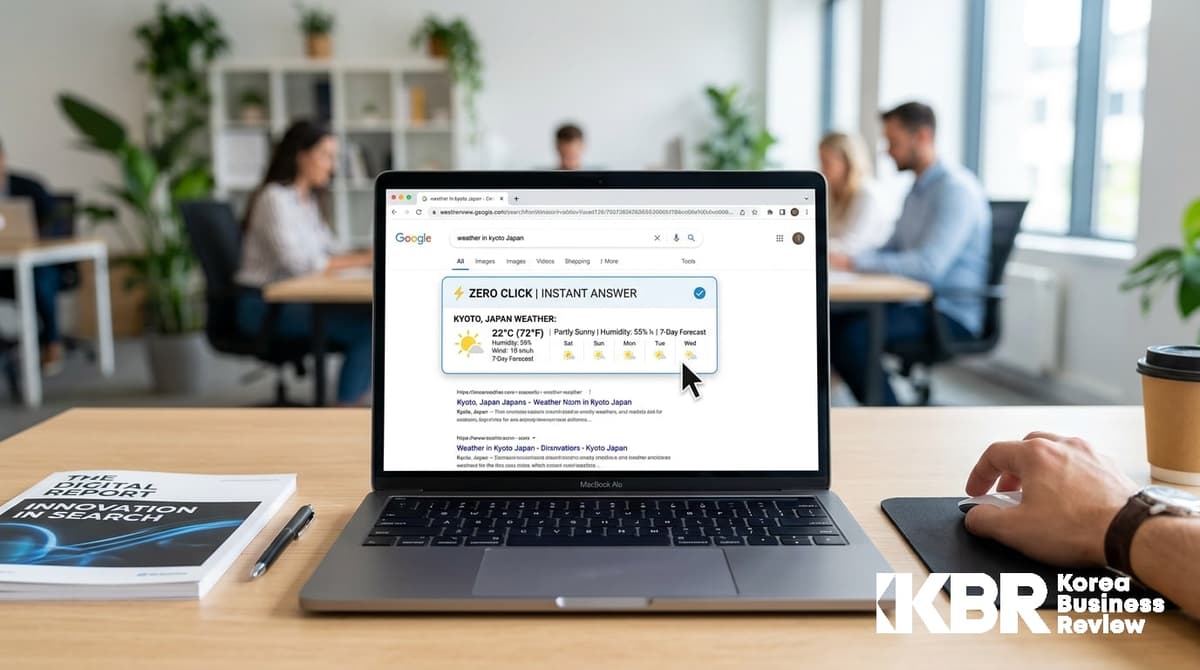
Zero-click refers to a phenomenon in which users enter a query into a search engine or AI-based platform, obtain an answer directly from the search result page or AI summary screen, and do not click on any external links. Past search behavior followed a sequence of entering a query, reviewing the result list, clicking a link, and visiting a website. However, as AI summary functions and portal direct-answer services have become commonplace, the final two steps of this flow are being omitted with increasing rapidity. People still use the search bar, but they do not visit any websites as a result.
Zero-click goes beyond simple changes in user behavior. It is gaining attention as a phenomenon that exerts a structural impact across digital businesses—including media, marketing, e-commerce, and financial information services—that have generated advertising revenue or distributed content based on search traffic. To understand this concept, one must examine why this phenomenon has emerged at this point in time and how it operates across various industries.
Three Structural Causes Behind Zero-Click
The first cause is the advancement of AI technology. As AI services based on large language models, such as ChatGPT, Google Gemini, and Naver Clova X, have been integrated into the search environment, users are able to receive summarized answers within the search result screen even for complex queries. Representative examples include Google's AI Overview and Naver's AI Briefing function. Because these functions crawl multiple web pages and compress key details onto a single screen, the incentive for users to visit the original page is reduced.
The second cause is the strategic design of platforms. Major search platforms like Google and Naver have designed search result pages to encourage users to stay within their own services for as long as possible. Simple factual information such as weather, exchange rates, stock prices, and sports match results has long been displayed directly at the top of search results. AI summaries are an extension of this strategy, expanding the scope so that even more complex information domains can be handled entirely within the platform.
The third cause is the shift in users' information consumption patterns. Users who grew up in a smartphone-centric mobile environment are accustomed to fast and concise information delivery. There is a growing tendency to prefer grasping the core points from a single screen rather than opening multiple tabs and navigating pages to read long articles. As these three factors intersect, zero-click is establishing itself not as the peculiar behavior of a few users, but as the new standard of digital search.
Direct Impact on Media and Marketing
The field where the impact of zero-click appears most directly is media and digital marketing. Media outlets and content creators have long used search traffic—namely the number of visitors arriving at their websites through search results—as the core foundation of their advertising revenue. However, when AI summaries display the core contents of an article directly on the search result screen, users feel no need to click on the original article. When traffic declines, ad impressions decrease, which directly leads to falling ad revenues. It is against this backdrop that media research institutions, including the Korea Press Foundation, have begun addressing this issue as a major agenda item.
In the digital marketing sector as well, a phenomenon is appearing where the effectiveness of traditional search engine optimization (SEO) strategies is weakening. Even if content ranks high in search results, if an AI summary covers the top spot, high ranking itself may not translate into increased traffic. Accordingly, a new concept called Answer Engine Optimization (AEO) is emerging in the marketing industry. AEO is a strategy that designs content structure and credibility so that a company's content is cited as a source or included in summaries when AI generates answers. Its approach differs from SEO, which simply targets high search rankings.
Interestingly, attempts are also emerging to transform the zero-click phenomenon itself into a marketing opportunity. So-called Zero-Click Marketing is a strategy that delivers value directly on the search result screen so that brands can build awareness and trust even if users do not click links. For example, content can be designed so that a company's brand name or product information is naturally included in AI summaries, or knowledge panels, review star ratings, and location information at the top of search results can be managed accurately to leave a positive first impression without a click.
This strategy requires a redefinition of traditional digital marketing performance metrics. Performance measurement methods centered on click-through rates (CTR) or page visitor counts make it difficult to properly capture the brand exposure effect in a zero-click environment. Discussions are spreading within the marketing industry that a new metric system must be established, such as exposure frequency on search result screens, citation counts within AI summaries, and changes in brand search volume.
Challenges Faced by Businesses and Directions for Response
The core challenge companies face in the zero-click era is the vulnerability of traffic-dependent revenue models. Business models based on search traffic—such as ad revenue, content subscriptions, and e-commerce inflows—face structural pressure as the zero-click ratio increases. To cope with this, some media and content companies are reportedly shifting their strategies toward reducing their reliance on search traffic and strengthening their own channels, such as direct subscriptions, newsletters, and communities.
Meanwhile, it is also worth noting that zero-click does not replace all information exploration. In areas requiring complex decision-making, such as financial product comparisons, medical information verification, and high-priced product purchases, analysis shows that users use AI summaries as a starting point while engaging in cross-verification behavior by checking original materials directly. In other words, a dual structure is forming where zero-click operates strongly in simple information lookup areas, while clicking behavior is still maintained in areas requiring trust and judgment.
Ultimately, zero-click is a signal foreshadowing a fundamental reorganization of the digital business environment. Companies that have taken search traffic for granted must re-examine the validity of their existing strategies as AI strengthens its role as an intermediary in information distribution. The shift toward building trust without clicks rather than inducing clicks, and measuring brand presence rather than traffic, is emerging as a core challenge for digital strategies in the zero-click era.