RESEARCH NOTES
Is Soju Sales Still Tied to the Economy? The 'Inverted Correlation' Revealed by Data
Soju and alcohol are no longer 'recession buffers,' shifting instead into items where consumption declines even amid economic stagnation. Over the past decade, total alcohol and soju shipments have structurally decreased regardless of economic cycles, showing a post-COVID brief rebound followed by a continued downturn. During the sluggish domestic demand period from 2023 to 2026, household alcohol expenditure, soju retail sales, and major corporate soju revenue simultaneously declined, demonstrating that the 'soju in a recession' formula no longer works. With shrinking drinking populations and frequencies, the spread of preference-driven alcohol consumption, and the subordination of soju demand to dining-out economies, soju is becoming a product tied to dining and cultural trends rather than an inferior or recession-proof good. As the domestic market structurally stagnates, the industry is focusing on low-proof and premium products and export expansion, reading soju sales no longer as an economic thermometer, but as a cultural indicator reflecting Korean drinking culture and the spread of K-content.
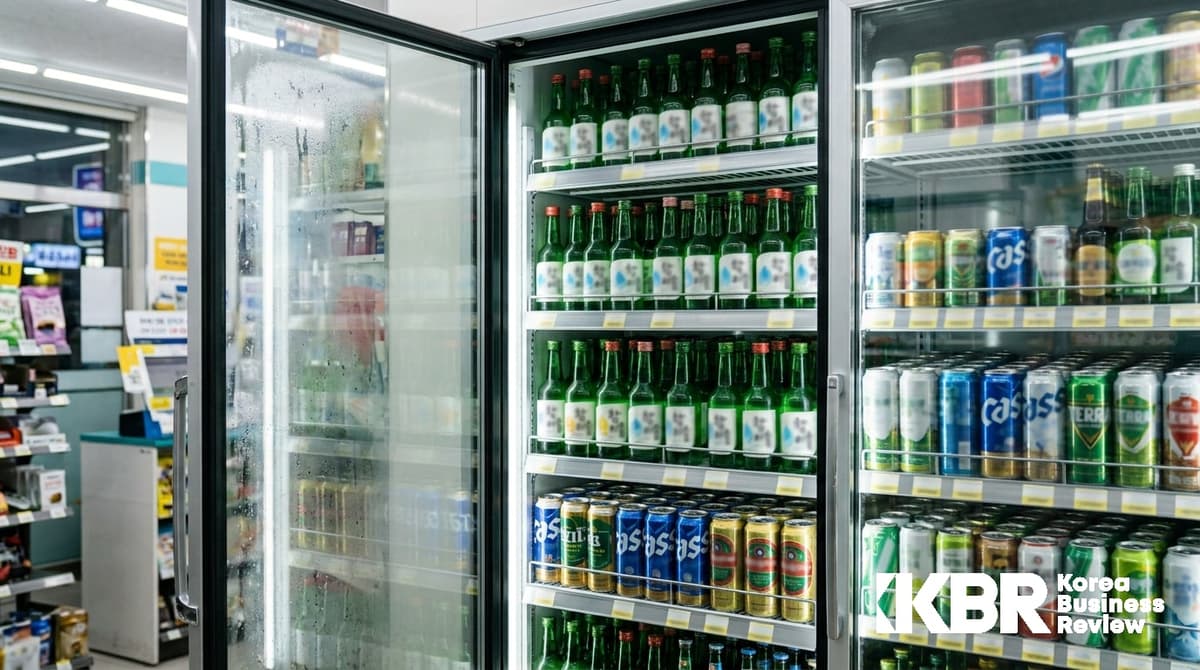
"Soju Sells Well in a Recession" Is Now an Old Adage… The New Eq…
KBR Access
Read this KBR Analysis article now
Buy this article for ₩3,900 (30 days of access), or get KBR+ 10 — 10 paid articles for ₩9,900 (₩990 each). KBR Members (free sign-up) read one paid article free every month.
✓ No account needed · Checkout is in Korean
Best value
KBR+ 10 · ₩9,900
An insight pass that opens 10 KBR+ articles, one at a time, whenever you like
10 KBR+ articles including KBR Analysis — ₩990 each. Use them within 60 days.
Get KBR+ 10KBR NEWSLETTER
Sign up for free and get the KBR Newsletter!
Sign up and opt in to the newsletter to receive KBR's curated business and economic insights by email.
LATEST IN TOPIC
Latest in this topic



Related Content