

BUSINESS / INVESTMENT
Can Vietnam Become the 'Second China'? The Race Toward an Asian Hub and Three Gateways
Vietnam surpassed $500 billion in GDP (approx. $514 billion) in 2025 with an 8% growth rate, entering upper-middle-income status with a per capita GDP of $5,026, and maintained momentum with 7.83% growth in the first quarter of 2026. While 2026 growth forecasts range from 6.3% (World Bank) to 7.6% (AMRO), the Vietnamese government has set an aggressive target of 10%, making the gap between ambition and reality a key watchpoint for the second half of the year. Korean investments—such as Samsung Electro-Mechanics' 1.8 trillion won FC-BGA investment, LG Innotek's Hai Phong expansion, and 74 MOUs signed at the April Korea-Vietnam Business Forum, totaling approximately $90 billion cumulatively—are elevating Vietnam from a 'low-wage assembly plant' to an 'AI substrate and R&D hub.' The U.S. 20% reciprocal tariff actually highlights Vietnam's price competitiveness compared to China (55%), but a 40% transshipment tariff pressures the simple assembly model, making the enhancement of local content a core task for Korean companies. Although the effective date of FTSE Emerging Market inclusion on September 21, 2026, opens capital market opportunities, the conclusion remains that Vietnam can only become an independent Asian hub—rather than a second China—if it clears three gateways: power infrastructure, competition with India, and policy consistency.
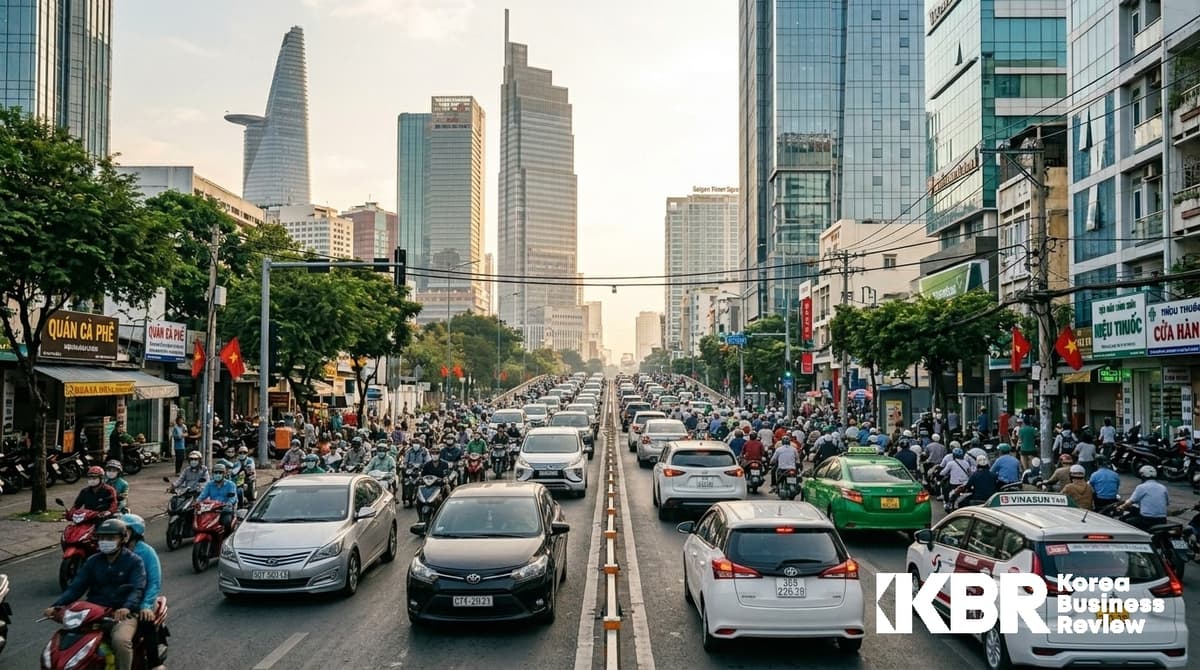
GDP Surpasses $500 Billion, FTSE Emerging Market Promotion, and $95.1 Billion in Korean Investments… Yet Tariffs, Power, and India Remain Variables. The Vietnamese economy has reached an inflection point.…
KBR Access
Read this Global Radar article now
Buy this article for ₩3,900 (30 days of access), or get KBR+ 10 — 10 paid articles for ₩9,900 (₩990 each). KBR Members (free sign-up) read one paid article free every month.
✓ No account needed · Checkout is in Korean
Best value
KBR+ 10 · ₩9,900
An insight pass that opens 10 KBR+ articles, one at a time, whenever you like
10 KBR+ articles including KBR Analysis — ₩990 each. Use them within 60 days.
Get KBR+ 10KBR NEWSLETTER
Sign up for free and get the KBR Newsletter!
Sign up and opt in to the newsletter to receive KBR's curated business and economic insights by email.
LATEST IN TOPIC
Latest in this topic
 A Different Starting Point for Entrepreneurship Found in Small Business Successions in Japan: Taking Over Customers and Equipment First
 Delta Air Lines Sees Rising Revenue but Lower Operating Margins: A Revenue Structure That Withstands High Fuel Costs
 Airbus Secures 110 Additional Aircraft Orders: Can It Achieve the Goal of 870 Deliveries This Year?
Related Content