

ESG POLICY & STRATEGY
What Is Ongoing Emissions Responsibility? The New Net-Zero Standard of SBTi 2.0
The SBTi introduced the 'Ongoing Emissions Responsibility' (OER) framework in its Corporate Net-Zero Standard Version 2.0 released on June 11, 2026. OER consists of three stages: an optional recognition program, post-2035 removal requirements, and the neutralization of residual emissions at net-zero. The recognition program is divided into three tiers—Engaged, Advanced, and Leadership—with contribution budgets ranging from $20 to $80 per ton. Valued mitigation outcomes (VMOs) used for OER must be accounted for separately from inventories and target progress, and cannot be claimed as emission deductions. The standard takes effect on February 1, 2027, and requirements beyond 2035 are scheduled to be re-evaluated in version 3.0.
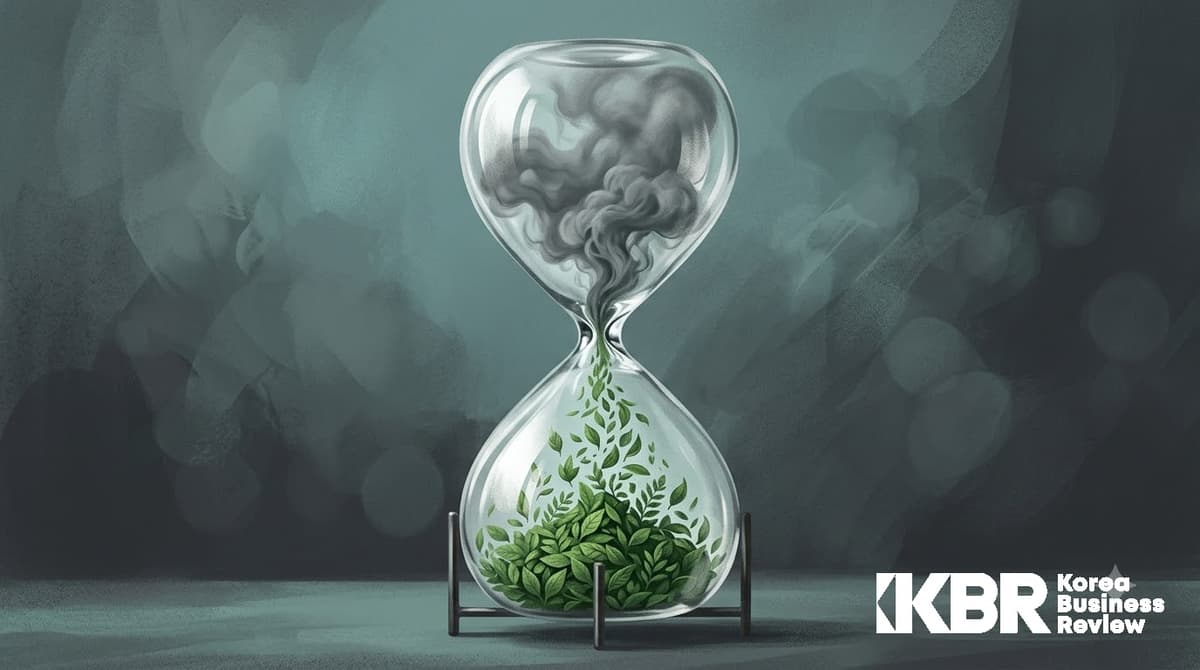
One of the most frequent questions asked of companies declaring net-zero targets is, "What will happen to the greenhouse gases being emitted right now?" While reduction targets point toward future milestones in 2030, 2040, and 2050, emissions continue today.…
KBR Access
Read this ESG article now
Buy this article for ₩3,900 (30 days of access), or get KBR+ 10 — 10 paid articles for ₩9,900 (₩990 each). KBR Members (free sign-up) read one paid article free every month.
✓ No account needed · Checkout is in Korean
Best value
KBR+ 10 · ₩9,900
An insight pass that opens 10 KBR+ articles, one at a time, whenever you like
10 KBR+ articles including KBR Analysis — ₩990 each. Use them within 60 days.
Get KBR+ 10KBR NEWSLETTER
Sign up for free and get the KBR Newsletter!
Sign up and opt in to the newsletter to receive KBR's curated business and economic insights by email.
LATEST IN TOPIC
Latest in this topic
 EUDR Implementation Dates Vary: Coffee Exports and the Record of Raw Materials to Be Connected
 EU Pay Transparency Directive Implementation in 2026: Mandatory Salary Disclosure and Strategy for South Korean Companies
 Emissions Rise Despite More Renewables: The Missing Time Dimension in Corporate Power Strategies
Related Content