ESG POLICY & STRATEGY
Carbon Footprint Is No Longer 'Feel-Good Marketing' — It Becomes a 'Second Cost' in 2026
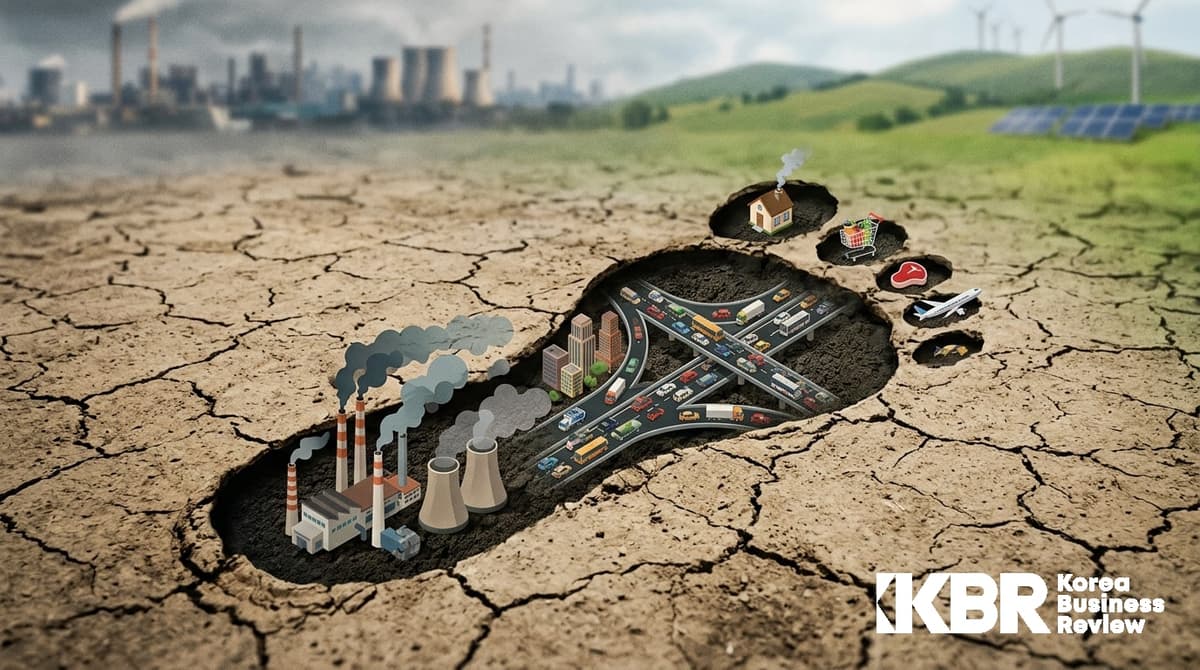
With the full implementation of the CBAM in January 2026 and the finalization of the KSSB in February, the carbon footprint has shifted from a 'measurement target' to an object of 'payment and reporting.' The EU CBAM imposes carbon costs on the import of six categories including steel and aluminum, with the certificate price for the first quarter announced at 75.36 euros per ton (April 2026). As the CSRD, Green Claims, and Digital Product Passport (DPP) intersect, regulatory focus is narrowing beyond company-wide levels to questioning the carbon of a 'single product' (PCF). South Korea will begin disclosures starting with KOSPI-listed companies with assets of 30 trillion won or more in 2028 (FY2027), while providing a three-year grace period until 2031 for Scope 3, which is the most challenging. Ultimately, companies equipped with verifiable carbon data infrastructure will reduce costs and gain bidding leverage, meaning the grace period is a 'preparation period,' not an 'exemption.'
Carbon Footprint Is No Longer…
KBR Access
Read this ESG article now
Buy this article for ₩3,900 (30 days of access), or get KBR+ 10 — 10 paid articles for ₩9,900 (₩990 each). KBR Members (free sign-up) read one paid article free every month.
✓ No account needed · Checkout is in Korean
Best value
KBR+ 10 · ₩9,900
An insight pass that opens 10 KBR+ articles, one at a time, whenever you like
10 KBR+ articles including KBR Analysis — ₩990 each. Use them within 60 days.
Get KBR+ 10KBR NEWSLETTER
Sign up for free and get the KBR Newsletter!
Sign up and opt in to the newsletter to receive KBR's curated business and economic insights by email.
LATEST IN TOPIC
Latest in this topic
 EUDR Implementation Dates Vary: Coffee Exports and the Record of Raw Materials to Be Connected
 EU Pay Transparency Directive Implementation in 2026: Mandatory Salary Disclosure and Strategy for South Korean Companies
 Emissions Rise Despite More Renewables: The Missing Time Dimension in Corporate Power Strategies
Related Content